Tuscany Without the Tourist Trap: Where the Light Changes Everything
The golden hour in Tuscany isn't merely an hour — it's an event, a declaration, a fundamental shift in the very air you breathe.
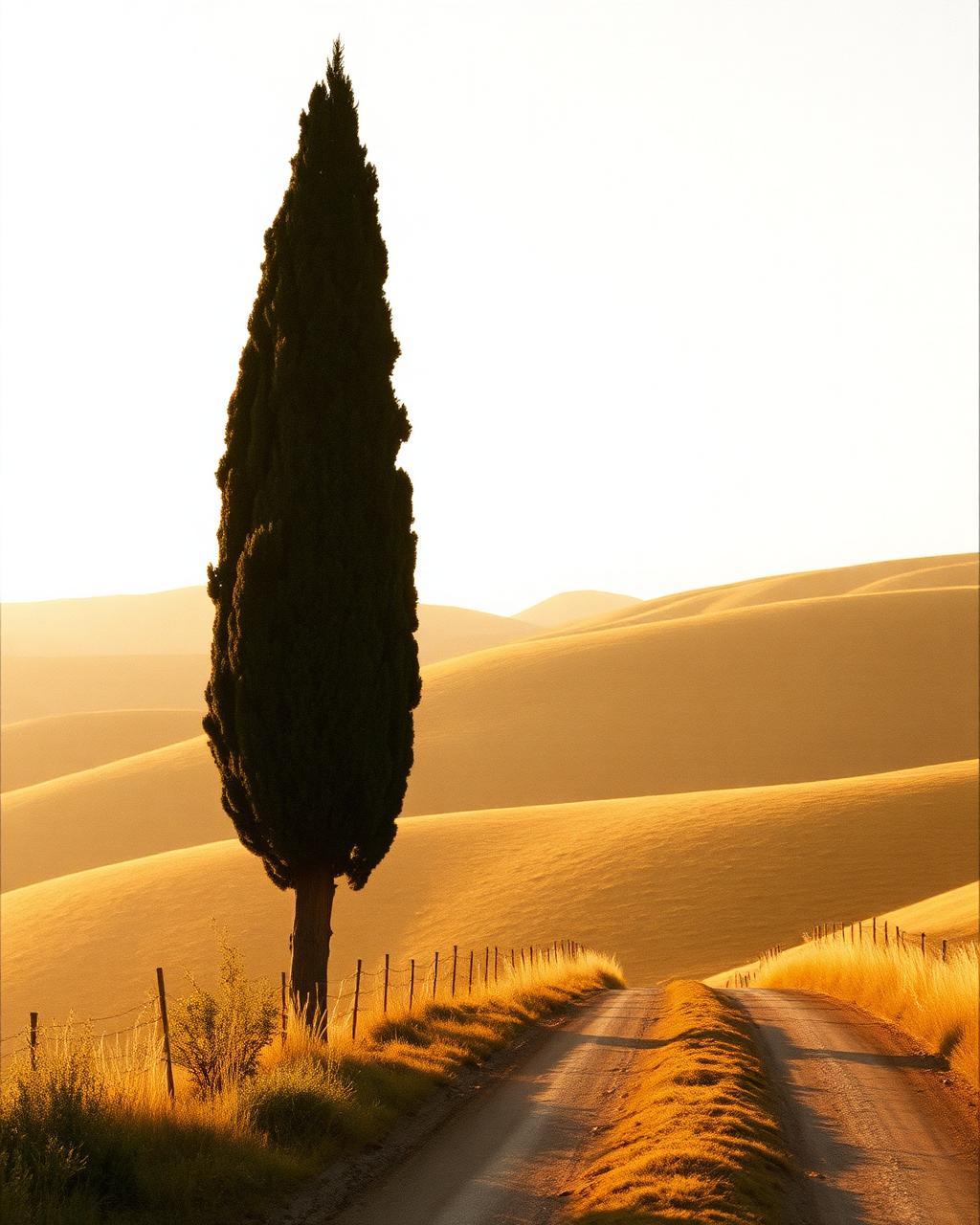
The golden hour in Tuscany isn't merely an hour; it's an event, a declaration, a fundamental shift in the very air you breathe. It was my second evening in the rolling hills, perched on a terrace overlooking Val d'Orcia, a glass of Brunello in hand, watching the landscape transform from bright afternoon greens into something honeyed and ancient. The cypress trees, standing like dark sentinels along winding white roads, cast shadows that stretched impossibly long. The stone farmhouses glowed warm amber. And for a moment, the entire valley looked like a Renaissance painting that had somehow kept breathing for five hundred years.
It was 2022, and I was in Italy with my family — Tunde and Kaiden — on a trip that carried more emotional weight than most. I have Sicilian-American heritage through my adoptive family. Italy, for me, is never just a destination. It's a conversation with identity, with belonging, with the complicated question of what it means to claim a culture that raised you but didn't birth you.
The Tuscany Everyone Thinks They Know
Tuscany suffers from its own beauty. It has been so thoroughly romanticized — by films, wine labels, memoirs about buying crumbling villas — that many travelers arrive with a fully formed fantasy. They expect the Under the Tuscan Sun experience: golden light, handsome farmers, perfectly rustic meals served on terraces overlooking vineyards. And Tuscany delivers all of that, which is both its gift and its trap.
The trap is that this romanticized version can become a barrier to actually seeing the place. When you arrive expecting a movie set, you risk treating every moment as confirmation of a fantasy rather than an encounter with reality. The Tuscany I found was more interesting than the dream: it was lived-in, working, occasionally unglamorous, and profoundly beautiful precisely because it was real.
Beyond Florence: Where Tuscany Gets Honest
Florence is magnificent and unavoidable — the Uffizi, the Duomo, the Ponte Vecchio. I won't pretend otherwise. But Florence in peak season is also exhausting: the crowds at the Accademia to see David, the lines for everything, the sense of being processed through a tourism machine. We gave Florence two days — enough to see the essentials, eat well, and get out.
Siena was our first stop beyond Florence, and it immediately felt different. The Piazza del Campo, that extraordinary shell-shaped square, was alive with locals — not just tourists. Children played, couples strolled, elderly men argued over espresso. The Gothic cathedral, with its dramatic striped marble facade, is one of the most beautiful churches in Italy. But what I loved most about Siena was its scale — walkable, intimate, proud without being performative.
San Gimignano, the "Medieval Manhattan" with its famous towers, was worth a half-day visit. The towers, built by competing noble families as displays of wealth and power, create a skyline that looks impossible. We climbed the tallest one for views that stretched across the entire Tuscan countryside.
Val d'Orcia was where Tuscany fully revealed itself. This UNESCO-protected valley is the landscape you see on every Tuscan postcard — the rolling hills, the lone cypress trees, the winding roads. We drove slowly through Pienza, Montalcino, and Montepulciano, stopping for wine tastings, cheese shops, and long lunches in small trattorias where the menu was whatever the kitchen had made that morning.
The Food: Ritual, Not Performance
Tuscan food is deceptively simple. It doesn't try to impress you with complexity. Instead, it insists on the quality of each ingredient and the respect of each preparation. Ribollita, the thick bread soup. Bistecca alla fiorentina, a massive T-bone grilled rare over wood. Pici, the hand-rolled pasta that's thicker than spaghetti and holds sauce like a dream. Pecorino from Pienza, drizzled with local honey.
We stayed at an agriturismo — a working farm with guest rooms — for three nights. Dinner was communal, served at a long table under a pergola. The farmer's wife cooked everything from ingredients grown or raised on the property. The olive oil was theirs. The wine was theirs. The vegetables came from the garden we could see from our window. It was the most honest meal I've ever eaten, and it ruined me for pretentious restaurants forever.
Heritage and Belonging
Being in Italy as someone with Sicilian-American heritage through adoption is a particular kind of experience. I grew up with the food, the gestures, the values, the warmth of an Italian-American family. But I am also a Black woman, and my biological lineage traces elsewhere. Italy holds me in this productive tension — I belong and I don't. I am home and I am a visitor.
In Tuscany, this tension softened. Perhaps it was the landscape, which doesn't ask you to prove anything. Perhaps it was the communal meals, where everyone is simply fed. Perhaps it was watching Kaiden — who carries both Yoruba and Sicilian heritage in his blood — run through olive groves without any awareness of the complicated identity questions his parents navigate. Children, I've noticed, belong everywhere they are loved. Adults make it harder.
Practical Wisdom
Rent a car. Tuscany beyond Florence requires wheels. The trains connect major cities but miss the small hill towns and agriturismos that are the heart of the experience. Driving the white roads of Val d'Orcia is one of the great pleasures of Italian travel.
When to visit. May, June, September, and October are ideal. July and August are blazing hot and crowded. November brings truffle season, which is magnificent if you can handle cooler, grayer weather.
What to skip in Florence. The Uffizi is essential; the Accademia (for David) is essential. Most everything else can be experienced by simply walking the city. Skip the overpriced leather market near San Lorenzo — the quality is inconsistent and the pressure is relentless.
Budget for wine. Tuscany produces some of Italy's greatest wines — Brunello di Montalcino, Vino Nobile di Montepulciano, Chianti Classico. Wine tastings at estates are affordable and often include food. Budget for shipping a case home; you will want to.
What the Light Changes
I think about that Tuscan light often. Not just because it was beautiful — though it was, achingly so — but because of what it did to my perception. In that golden hour, everything looked more itself. The stones were stonier. The green was greener. The age of things became visible, not as decay but as depth. Tuscany's light doesn't flatter; it reveals. And what it reveals is that beauty isn't about perfection. It's about time, about patience, about things that have been tended and weathered and loved into their current form.
That's what I carry from Tuscany. Not the wine, not the views, not even the food — though all of those were extraordinary. What I carry is the understanding that the most beautiful things are the ones that have been shaped by time and use and care. Including, perhaps, the complicated, layered, imperfect thing that is my own identity.