What the Mainland Gets Wrong About Hawai'i — And What the Islands Actually Ask of You
I scheduled my Hawaii trip during my birthday week because if I was going to be away, it needed to feel meaningful. Standing on black volcanic rock in Kailua-Kona, watching the Pacific meet the Big Island's raw coastline, I understood why.
Hawaiian Islands: What the Mainland Gets Wrong About Paradise
Hawaii felt like intention.
Not just another layover, but one I chose. I scheduled it during my birthday week because if I was going to be away, it needed to feel meaningful. And it did.
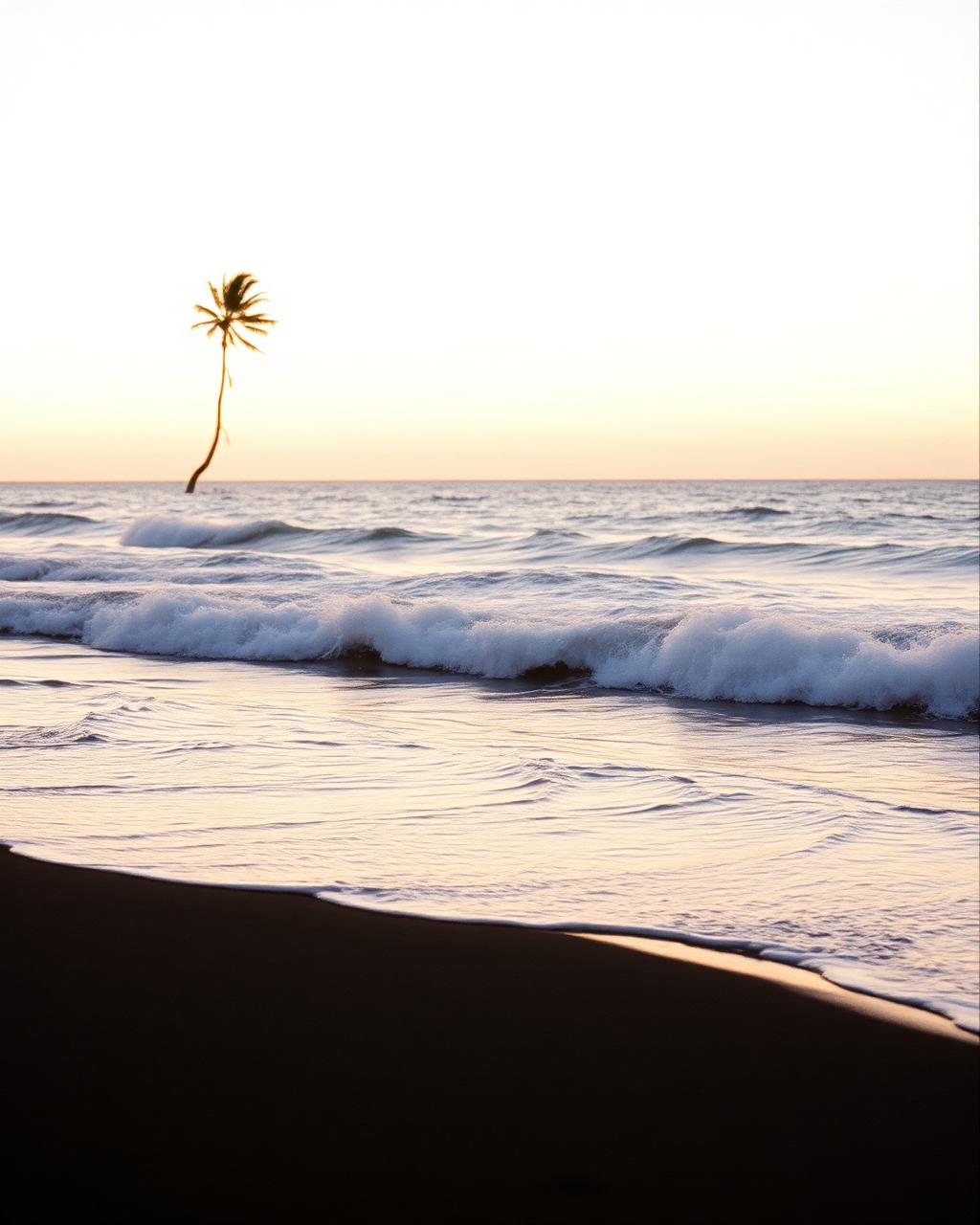
I stayed in Kailua-Kona, along the western coast of the Big Island, where the land meets the Pacific in a way that feels raw and untouched. The landscape looked different immediately. Black volcanic rock stretched along the coastline, rough and uneven, shaped by time and eruption rather than erosion. Palm trees rose out of that contrast, their green cutting sharply against the dark ground, while the ocean beyond shifted endlessly in shades of deep blue.
I stayed at Outrigger Kona Resort and Spa, where everything felt open. The air was warm, but soft, carried by a constant breeze that moved through the space without ever feeling heavy. And when I arrived, I was greeted with a lei. Fresh flowers draped gently around my neck, their scent subtle but present, grounding the moment instantly.
It was not only a welcome. It was a feeling. One that said: you are here now.
The Night Snorkel That Changed Everything
That night, the ocean became something else entirely.
At Keauhou Bay, I did night snorkeling with manta rays, and nothing about it felt ordinary. The water was dark — not just dim, but dark in a way that makes you aware of everything you cannot see. Lights were placed beneath the surface, illuminating the water just enough to reveal movement.
And then they appeared.
Manta rays.
Massive. Graceful. Gliding through the water like they were not bound by it at all.
They did not rush. They did not react. They moved in slow, fluid motions, wings opening and closing as they circled beneath us, rising and dipping effortlessly through the light. At times, they came close — close enough to feel the shift in the water around them, close enough to understand their size not only visually, but physically.
It was calm. But powerful. Silent. But unforgettable.
It did not feel like an activity. It felt like being invited into something ancient, something that existed long before I arrived and would continue long after I left. The ocean holds things we cannot see from shore. And that night, it showed me just enough to understand how little I know about the world beneath the surface.
What the Mainland Gets Wrong
Most people picture Hawaii through the lens of Waikiki — the crowded Oahu beach with high-rise hotels, ABC stores on every corner, and tourists in matching floral shirts. That version of Hawaii exists, and it serves a purpose. But it is not the whole story. It is barely the introduction.
The Big Island — Hawai'i Island — is where the land itself becomes the experience. This is the youngest island in the chain, still being formed by active volcanoes, still growing. The landscape here does not look like a postcard. It looks like the earth is still deciding what it wants to be.
Driving from Kona to the Volcanoes National Park, the terrain shifts dramatically every twenty minutes. Coastal desert gives way to lush rainforest, which gives way to barren lava fields, which gives way to tropical gardens. The Big Island contains eleven of the world's thirteen climate zones. That is not a travel brochure statistic — it is something you feel in your body as the air changes temperature and humidity within a single drive.
Volcanoes National Park: Where the Earth Is Still Alive
Standing at the edge of Kīlauea's caldera, watching steam rise from vents in the earth, I felt a particular kind of awe that I have only experienced a handful of times in my travels. This was not the awe of beauty — it was the awe of power. The earth beneath my feet was not finished. It was still working.
The Crater Rim Trail offers views that shift from lush fern forests to stark, lunar-like landscapes within a single mile. The Thurston Lava Tube — a tunnel carved by flowing lava centuries ago — is dark, cool, and humbling. Walking through it, you are walking through the interior of a volcanic eruption, preserved in stone.
What moves me about this place is its honesty. The Big Island does not perform beauty for you. It is beautiful because it is real — raw, unfinished, still in the process of becoming.
The Cultural Weight of Place
Hawaii is not just a vacation destination. It is a sovereign nation that was overthrown, a culture that was nearly erased, and a people who continue to fight for recognition and respect. As a traveler — particularly as a Black woman who understands the weight of cultural erasure — I carry an awareness in Hawaii that changes how I move through the space.
The lei I received at the hotel was not just a decoration. In Hawaiian culture, the lei represents love, honor, and respect. The flowers are chosen intentionally. The act of giving is a welcome into community. When you understand this, the gesture transforms from tourist ritual to something sacred.
I visited a local cultural center where Hawaiian elders shared stories of navigation — the ancient Polynesian wayfinding techniques that brought their ancestors across thousands of miles of open ocean using only stars, currents, and the flight patterns of birds. The sophistication of this knowledge humbled me. These were not primitive explorers. They were scientists, mathematicians, and philosophers who understood the ocean as intimately as any modern GPS system.
This is what the mainland gets wrong about Hawaii. It treats the islands as scenery, as backdrop, as a place to relax. But Hawaii is a living culture with a history that demands engagement, not just appreciation.
Kona Coffee Country
The coffee farms along the slopes of Hualalai and Mauna Loa produce some of the most prized coffee in the world, and the experience of visiting them is nothing like walking into a Starbucks.
I visited a small family-run farm where the owner walked me through the entire process — from cherry to cup. The trees were shaded by macadamia nut trees, creating a canopy that filtered the sunlight and regulated the temperature. The cherries were picked by hand, one by one, only the ripe ones selected. The processing took weeks. The roasting was done in small batches, monitored by sound and smell as much as temperature.
The resulting cup was clean, bright, and complex — nothing like the burned, bitter versions sold under the Kona name at grocery stores. Real Kona coffee is an experience, not a commodity. And learning the labor behind it changed how I think about every cup I drink.
The Ocean as Teacher
In Hawaii, the ocean is not just a view or a recreation area. It is a living presence that shapes the culture, the economy, the rhythm of daily life, and — if you let it — your understanding of yourself.
Swimming in the Pacific off the Kona coast, I was aware of the depth beneath me in a way I had never been before. The water was warm, clear, and endlessly blue, but I knew that just offshore, the seafloor dropped thousands of feet into some of the deepest water on earth. That knowledge — that awareness of depth — changed the quality of the swim. I was not floating on top of the ocean. I was floating on top of something vast and unknowable.
The manta ray experience reinforced this. What we see from the surface is only a fraction of what exists below. And what exists below does not need us — does not notice us — but will reveal itself if we approach with patience and respect.
This is what the Big Island teaches. It teaches scale — the scale of geological time, the scale of oceanic depth, the scale of cultural history that stretches back millennia. And against that scale, your own concerns and schedules begin to feel appropriately small.
Practical Wisdom
When to go: Hawaii is beautiful year-round, but the Big Island's dry season (April through October) offers the best conditions for snorkeling, hiking, and outdoor exploration. The wet season brings lush green landscapes and fewer crowds.
Where to stay: The Outrigger Kona Resort and Spa offers an excellent combination of location, amenities, and ocean access. For luxury, the Mauna Lani on the Kohala Coast is world-class. Budget travelers should consider vacation rentals in Captain Cook or Kealakekua for the best value.
Getting around: You need a car on the Big Island — public transit is limited and the distances between attractions are significant. Rent a four-wheel drive if you plan to visit Mauna Kea for stargazing.
What to do: Night snorkeling with manta rays at Keauhou Bay. Volcanoes National Park for a full day. A Kona coffee farm tour. Snorkeling at Two Step (Honaunau Bay). And the Puuhonua o Honaunau National Historical Park for cultural context.
What to pack: Reef-safe sunscreen is required by law. Bring layers for the elevation changes — it can be 85°F at the coast and 45°F at Mauna Kea's summit. Water shoes for the rocky coastline.
What Hawaii Gives You
I went to Hawaii for my birthday because I wanted the trip to mean something. And what it gave me was not relaxation — not in the passive, resort-pool sense of the word. What it gave me was perspective.
The Big Island showed me that the earth is still alive, still growing, still becoming. The manta rays showed me that the world beneath the surface is vast and graceful and completely indifferent to my schedule. The coffee farmers showed me that the best things in life take time, attention, and care.
And the Hawaiian people showed me that culture is not a performance. It is a practice — daily, deliberate, and worth protecting.
I carry all of that with me. And when clients ask me where to go when they want more than a vacation — when they want a trip that actually changes something inside them — Hawaii is always in the conversation.
Not the postcard version. The real one.