Stockholm: What Happens When You Stop Trying to See Everything
Sweden felt calm — not in a way that demanded attention, but in a way that slowly settled into my body the longer I stayed. This was a layover that became a lesson in what travel looks like when you let a city reveal itself on its own terms.
Sweden: The Nordic Art of Traveling Without Rushing
Sweden felt calm.
Not in a way that demanded attention, but in a way that slowly settled into my body the longer I stayed. This was a layover in Stockholm, and the city revealed itself through movement more than moments.
I walked. No plan. Just direction.
Stockholm stretches across water, a city built on islands where land and sea weave into each other seamlessly. Every few blocks, the view opened — water appearing again, calm and reflective, like the city was constantly reminding me to slow down.
Crossing Into Gamla Stan
Crossing Strömbron, the air felt crisp against my skin — cool without being harsh. Below, the water moved gently, barely rippling, reflecting the pale sky and the soft tones of the buildings along the edges.
Boats drifted slowly. Nothing rushed. Nothing loud. Even the movement felt intentional.
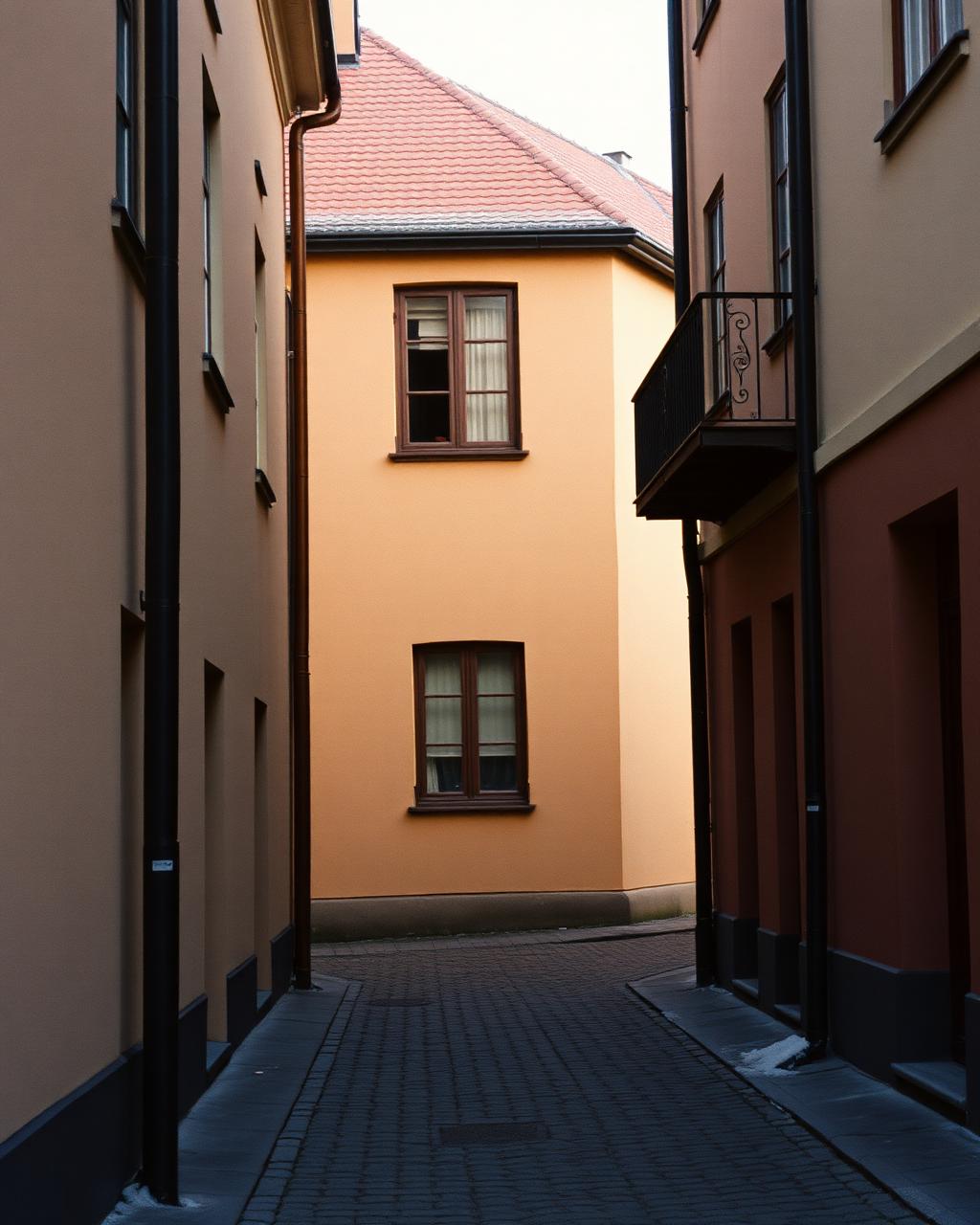
I made my way into Gamla Stan, and immediately, everything narrowed. The streets became tighter, winding between tall, historic buildings that leaned inward slightly, as if holding the space together. Cobblestone lined the ground, uneven but worn smooth in places, each step grounding me in the age of it all.
The light shifted there — filtered, soft — as it moved between the buildings.
And then there was Stortorget.
The space opened suddenly, revealing a square that felt almost storybook-like. Buildings in shades of mustard yellow, burnt orange, and deep red stood side by side, their facades textured, their windows evenly spaced, their presence warm against the cool tones of the sky.
It reminded me of Denmark. That same charm. That same quiet balance between color and structure. It did not feel curated. It felt natural.
The Bar Nobody Talks About
I stepped into a small bar tucked along one of the narrow streets. The entrance was easy to miss — just a door between buildings, no loud signage pulling you in. But inside, the space shifted completely.
Dim lighting. Wood tones. A warmth that contrasted the cool air outside.
The menu surprised me. Drink names that were unexpected — playful, slightly irreverent. The kind of creativity that tells you the people behind the bar care about what they are making. I ordered something I had never heard of and trusted the bartender's recommendation.
It was perfect.
Not because it was the best cocktail I have ever had, but because the entire experience — finding the bar, walking through Gamla Stan to get there, sitting in the warmth while the Nordic cold pressed against the windows — created a moment I did not plan and could not have predicted.
This is what layovers can be when you stop treating them as inconveniences and start treating them as invitations.
The Design of Everyday Life
What struck me about Stockholm — and what I think defines Swedish travel more broadly — is how design permeates everything. Not design in the Instagram sense, not aesthetic for the sake of photography, but functional beauty. The sense that every object, every space, every interaction has been considered.
The subway stations are famous for this. Several of them are carved directly into bedrock, the raw stone left exposed and then painted — some in bold colors, some in gentle gradients. It turns a daily commute into an art gallery. Most cities hide their infrastructure. Stockholm celebrates it.
The cafes practice fika — the Swedish tradition of coffee and pastry taken as a deliberate pause in the day, not a to-go cup grabbed between meetings. I sat in a small bakery near Södermalm, eating a cardamom bun with a cup of black coffee, watching Stockholmers do the same thing. Nobody was rushing. Nobody was on their phone. The act of sitting and consuming something slowly was treated as an activity in itself, not a gap between more important things.
For someone like me — someone who has spent most of her life in motion, building, planning, optimizing — this was revolutionary. Not because I had never heard of slowing down, but because Stockholm made it look so normal. So built into the culture. So unforced.
The Water That Holds the City
Stockholm is built on fourteen islands, and the water is omnipresent. Not in the way that a coastal city has water — visible at the edges, framing the land. In Stockholm, the water is woven through the city itself. You cross it constantly. You see it from almost every street. It appears in the gaps between buildings, in the bridges you walk across without thinking, in the reflections that double the sky.
I walked along Strandvägen, the waterfront promenade on Östermalm, where the buildings are grand in a way that feels earned rather than excessive. Sailboats were moored along the quay, their masts swaying gently. The Djurgården ferry departed from nearby, carrying visitors to the island's museums and gardens.
The Vasa Museum on Djurgården houses the only almost fully intact 17th-century ship ever salvaged — a warship that sank on its maiden voyage in 1628 and was pulled from the harbor 333 years later. Walking around the ship, preserved in the dim light of the purpose-built museum, I felt that particular awe that comes from standing in front of something that has survived far longer than anyone intended.
History in Sweden does not shout. It sits quietly and waits for you to notice.
What Scandinavian Travel Teaches
I have been to Denmark. I have been to Iceland. And now Stockholm. And what I notice across all three Nordic destinations is a shared philosophy that I think the rest of the travel world could learn from: comfort is not indulgence.
In Scandinavian culture, being comfortable — warm, well-fed, surrounded by good design and natural light — is not treated as luxury. It is treated as a baseline. A human right, almost. And when comfort is the starting point rather than the aspiration, something shifts in how you experience a place. You stop seeking. You start receiving.
This is what the Swedes call lagom — a word that roughly translates to "just the right amount." Not too much. Not too little. Enough. It applies to everything: how much food you serve, how much you speak in conversation, how much you decorate a room, how much you schedule into a day.
For American travelers — and I include myself in this — lagom is counterintuitive. We are trained to maximize. To fill every hour, every meal, every experience with as much as possible. Sweden gently suggests an alternative: what if enough is actually better than more?
Solo Travel in Scandinavia
Stockholm is one of the best cities in the world for solo travelers, particularly solo women.
The public transit is intuitive and safe at all hours. The city is walkable and well-lit. English is spoken fluently by nearly everyone. And the culture of personal space — which some travelers mistake for coldness — is actually a gift for the solo traveler. Nobody will bother you. Nobody will question why you are eating alone. Nobody will treat a woman by herself as unusual.
I felt completely at ease walking the streets alone at dusk, sitting in restaurants alone, navigating the metro alone. This ease is not something I take for granted. As a Black woman, I am always aware of how I am perceived in new environments. In Stockholm, I was perceived as exactly what I was — a traveler, moving through a beautiful city, minding my own business.
That kind of invisible acceptance is rare. And it matters more than most travel guides acknowledge.
Practical Wisdom
When to go: June through August for the longest days and warmest weather — Stockholm in midsummer has nearly twenty hours of daylight. September offers stunning fall colors and thinner crowds. Winter is magical if you embrace the darkness and the concept of mys (Swedish coziness).
Where to stay: The Hotel At Six in Brunkebergstorg is sleek, central, and quintessentially Swedish in its design. For charm, try a boutique hotel in Gamla Stan. Budget travelers should look at hostels on Södermalm — the neighborhood is young, vibrant, and walkable.
Getting around: Buy an SL Access card for unlimited public transit. The metro, buses, and ferries cover the entire city efficiently. Walking is the best way to experience Gamla Stan and Södermalm.
What to eat: Cardamom buns from any bakery. Swedish meatballs at a traditional restaurant — not the IKEA version. Smoked salmon on knäckebröd. And at least one meal at a food hall — Östermalms Saluhall is the most beautiful, Hötorgshallen the most authentic.
What to know: Sweden is essentially cashless. Bring a card that works internationally and leave your cash at home. Tipping is appreciated but not expected — service charges are included.
What Stockholm Leaves You With
I did not plan to fall in love with Stockholm. It was a layover — a practical stop between other destinations. But the city had other plans.
It taught me that calm is not the absence of activity. It is the presence of intention. Every street I walked, every coffee I drank, every moment I spent looking at the water between the buildings — all of it felt considered. Designed. Meant to be experienced slowly.
I carry Stockholm with me not as a destination I visited but as a philosophy I absorbed. The idea that travel does not have to be about doing everything. That sometimes the most meaningful trip is the one where you walk through a beautiful city with no plan at all, find a bar you were not looking for, and sit with a drink you have never tried while the world outside moves at exactly the pace it was meant to.
That is lagom.
That is Sweden.
And that is the kind of travel I want to help every client discover — the kind where you arrive somewhere new and realize that the most important thing you can do is exactly what you are already doing.