Hong Kong: A City That Rises — And What It Taught My Son About the World
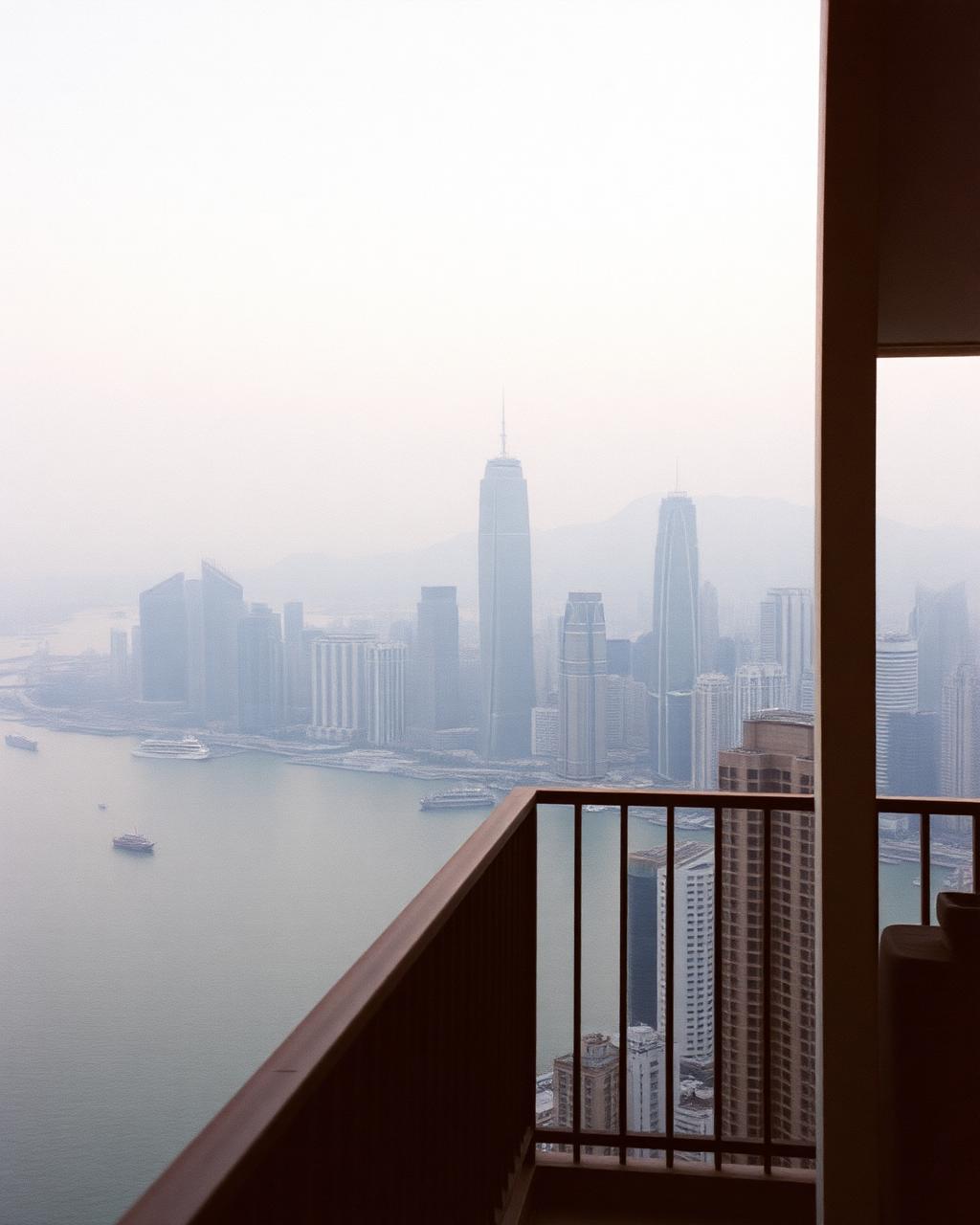
Hong Kong was the first stop on my son's ninth birthday trip. From the moment we arrived, everything felt elevated — buildings stretching upward, mountains rising behind them, water cutting through it all. This is a city that doesn't sprawl. It ascends.
Hong Kong: Where East Meets Everything
Hong Kong felt vertical.
A city that does not just spread — it rises. This was the first stop on my son's ninth birthday trip, and from the moment we arrived, everything felt elevated. Buildings stretching upward, mountains rising behind them, water cutting through it all.
We stayed near the harbor, where the skyline reflected across the water in sharp lines and shifting light. And then there was something unexpected — out in the water near Victoria Harbour stood a smaller version of something instantly recognizable: a replica of the Statue of Liberty. Not large. Not overwhelming. But enough to catch my attention. A reminder of something familiar placed within a completely different environment.
It felt almost surreal.
Hong Kong Disneyland: Smaller but Still Magic
Of course, we went to Hong Kong Disneyland.
Smaller than others. But still immersive. Still detailed. Still filled with that same energy that pulls you into it completely.
Watching Kaiden move through it — excited, present, fully engaged — made the experience feel bigger than the park itself. It was not just about where we were. It was about who we were there as: a mother and son celebrating another year of life in a city halfway around the world.
What I appreciate about the Hong Kong park specifically is its scale. It does not try to overwhelm you. The walkways feel manageable, the attractions are spaced well, and the crowd management — even during busy seasons — felt more controlled than what I have experienced at the American parks. For families with young children, this matters. Pacing is everything.
Ngong Ping 360: Where the City Disappears
But the moment that stayed with me most was leaving the city behind.
We made our way to Ngong Ping 360, and stepping into that cable car, everything changed. The glass cabin lifted slowly into the air, rising above the city, above the roads, above the buildings. And then the landscape opened.
Mountains stretched out beneath us, deep green and layered, their shapes rolling into one another as far as I could see. The water appeared in the distance, soft and expansive, blending into the horizon. The higher we went, the quieter it felt. The movement of the cable car was steady, almost silent, suspended between sky and earth.
It did not feel rushed. It felt suspended.
At the top was Tian Tan Buddha — massive, still, seated in a way that felt grounded, overlooking everything below. You do not just walk up to it. You climb. Step by step, the staircase rises toward it, and with each step, the view expands. By the time you reach the top, you are not just looking at a statue — you are standing inside a perspective.
Kaiden climbed every step. Nine years old, determined, pausing occasionally to look back at how far we had come. I let him lead. And at the top, standing beside him, I felt that particular kind of pride that travel gives you as a parent — the pride of watching your child meet something larger than themselves and not flinch.
Victoria Harbour at Night
If Hong Kong has a heartbeat, it lives along Victoria Harbour after dark.
The Symphony of Lights show happens nightly — buildings along both sides of the harbor synchronized in light and music, the water reflecting everything back in doubled intensity. It is not subtle. Hong Kong does not do subtle. But standing on the Tsim Sha Tsui promenade, watching the skyline perform, I understood something about this city that the daytime does not fully communicate.
Hong Kong is a place that believes in spectacle. Not in a shallow way — in a generous way. The city gives you everything it has, all at once, and trusts you to take what you need.
The Star Ferry carried us across the harbor for a few Hong Kong dollars, the cheapest and most cinematic commute in Asia. The boat rocks gently, the city lights reflecting in the water on both sides, and for ten minutes, you exist between two skylines. It is a passage, not just a crossing.
The Food: Where Culture Lives on Every Corner
Hong Kong's food scene operates on a principle I deeply respect: the best meals are often the cheapest, and the fanciest restaurants are not always the most memorable.
We ate dim sum in a fluorescent-lit restaurant with metal carts and communal seating. Har gow, siu mai, char siu bao — each dish arriving in bamboo steamers, the steam rising between us like punctuation. Kaiden tried everything. Some things he loved. Some things surprised him. All of it expanded his palate in ways that no American Chinese restaurant ever could.
The egg waffles — gai daan jai — became our daily ritual. Crispy on the outside, soft and slightly sweet on the inside, shaped like little bubbles and eaten walking through the streets. Street food in Hong Kong is not a supplement to the dining experience. It is the dining experience.
At a rooftop restaurant overlooking the harbor, we had Peking duck carved tableside, the skin lacquered and crisp, served with thin pancakes and hoisin sauce. The formality of the service contrasted with everything we had eaten that day, and both felt equally authentic. That is Hong Kong's gift — it holds all registers at once.
The Markets: A Sensory Education
Temple Street Night Market is not for the faint-hearted. It is loud, crowded, bright, and overwhelming in the best possible way. Stalls stretch for blocks — electronics, clothing, souvenirs, fortune tellers, and food vendors all competing for attention.
What I valued most was watching Kaiden navigate it. At nine, he was old enough to negotiate, to ask questions, to point at things he wanted to look at more closely. Travel markets are where children learn social skills that no classroom teaches — how to read a situation, how to be polite in unfamiliar contexts, how to decide what something is worth to them.
Ladies' Market in Mong Kok offered a similar energy with a slightly more curated selection. And the Jade Market — smaller, quieter — gave us a moment to slow down and look at something with care rather than speed.
The Contrast with Japan and South Korea
Having traveled to Japan and South Korea on the same trip, Hong Kong's character became even more distinct in comparison.
Japan asks for stillness. Its temples, gardens, and tea ceremonies are invitations to slow down and pay attention to details that would otherwise go unnoticed. South Korea pulses with a modern energy — K-pop, technology, street food culture — that feels young and forward-looking.
Hong Kong exists between these two energies. It has the depth of history — British colonial architecture standing beside traditional Chinese temples — and the relentless forward motion of a global financial center. It does not ask you to choose between old and new. It hands you both simultaneously.
For families considering an East Asian itinerary, I always recommend Hong Kong as either the starting point or the conclusion. As a starting point, it eases you into Asian travel with its English signage, efficient public transit, and familiar international infrastructure. As a conclusion, it gives you one final burst of intensity before the long flight home.
Practical Wisdom
When to go: October through December offers the best weather — warm but not humid, with clear skies that make the harbor views exceptional. Avoid July and August unless you are comfortable with intense heat and afternoon thunderstorms.
Where to stay: The Peninsula Hong Kong is legendary for a reason — old-world luxury on the Kowloon side with the best views of the island. For families, the Harbour Grand Kowloon offers spacious rooms at a more accessible price point. Budget-conscious travelers should look at hotels in Tsim Sha Tsui for the best combination of location and value.
Getting around: The MTR (subway) is one of the best public transit systems in the world — clean, fast, affordable, and English-friendly. The Octopus card works on the MTR, buses, ferries, and even at convenience stores. Buy one at the airport and load it up.
What to eat: Dim sum at Tim Ho Wan — the world's cheapest Michelin-starred restaurant. Egg waffles from any street vendor in Mong Kok. Roast goose at Yung Kee. And wonton noodle soup at Mak's Noodle in Central.
What to pack: Comfortable walking shoes are essential — Hong Kong is built vertically, and you will climb more stairs and hills than you expect. Bring a light rain jacket year-round and dress in layers for the aggressive air conditioning indoors.
What Hong Kong Teaches
Hong Kong taught me that contrast is not confusion — it is richness.
A city can be ancient and modern, loud and contemplative, crowded and intimate, all at the same time. And a child can experience that complexity with more grace than most adults give them credit for.
Watching Kaiden climb those stairs to the Tian Tan Buddha, watching him eat dim sum with chopsticks for the first time, watching him stand at the harbor and try to count the buildings — these are the moments that travel gives you that nothing else can replicate.
Hong Kong does not ask you to understand it. It asks you to experience it. And if you let it, it will show you that the world is bigger, louder, and more beautiful than you imagined — and that your children already know this, if you let them lead the way.