South Korea & Japan: Two Philosophies of Civilization Most Travelers Confuse
I arrived in Seoul on a Tuesday in late September, the air sweet with roasted chestnuts from a cart I hadn't found yet. Within twenty minutes, I understood what no amount of Instagram research had prepared me for: these are not variations on a theme.
The Quiet Power of Contrast
I arrived in Seoul on a Tuesday afternoon in late September, the kind of day where the light has already turned golden and the air smells like roasted chestnuts from a cart you haven't found yet. Within twenty minutes of stepping off the AREX train at Seoul Station, I understood something that no amount of Instagram research had prepared me for: South Korea and Japan are not variations on the same theme. They are entirely different philosophies of how a civilization should feel.
This is a mistake I see constantly — travelers who "do Asia" by combining Seoul and Tokyo into one trip as though they're neighboring rooms in the same house. They share a continent, yes. They share chopsticks and rice and a reverence for seasonal beauty. But the emotional experience of walking through Seoul's Bukchon Hanok Village at dusk is nothing like the quiet ceremony of entering a Kyoto temple garden at dawn. One is alive with friction and reinvention. The other is so still it makes you aware of your own breathing.
If you're planning a trip to East Asia, the best thing I can tell you is this: don't rush. Don't combine. Give each country the space it deserves, and you'll come home with two completely different versions of yourself.
Seoul: A City That Refuses to Choose Between Past and Future
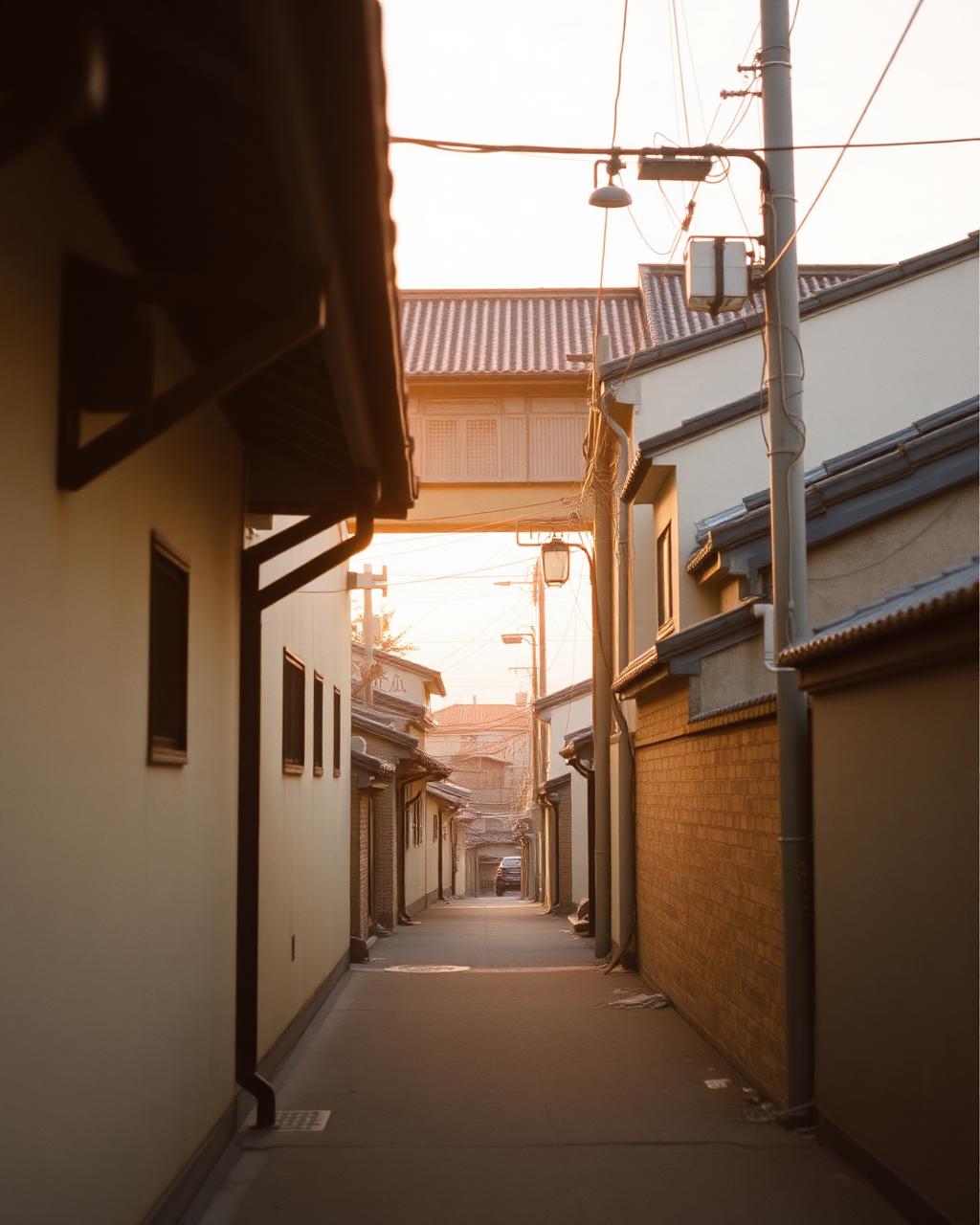
Seoul doesn't transition between old and new — it holds them simultaneously, like a conversation happening at two volumes. Bukchon Hanok Village is a perfect example: narrow streets of traditional wooden houses, still inhabited, still heated by ondol floors, sitting directly between two royal palaces while the glass towers of Gangnam glitter on the southern horizon.
Bukchon and Jongno: Where Seoul Begins
Start in Bukchon early, before the tour groups arrive. The best photo spot is Bukchon 8-gil, but the real magic is in the silence between the houses — the way the wooden gates are painted in earth tones that somehow match the mountains behind the city. Walk downhill into Insadong, where tea houses and calligraphy shops line streets that have served artists and monks for centuries. Ssamziegil, the spiral-walkway mall, is worth the detour — not for shopping but for the rooftop view.
Gyeongbokgung Palace is the anchor of this neighborhood. Rent a hanbok (traditional Korean dress) from one of the shops near Exit 3 — about 15,000 KRW for two hours — and you'll get free palace entry plus photographs that look like they belong in a film. The Changing of the Guard ceremony happens at 10am and 2pm, and it's genuinely impressive, not performative.
Gwangjang Market: Where Seoul Eats
Five minutes from Jongno 5-ga Station, Gwangjang Market is Korea's oldest continuously operating market, and it's where I had the meal that rewired my understanding of Korean food. Not the barbecue — everyone finds the barbecue. I mean the bindaetteok (mung bean pancakes, crispy and savory, served from a stall near the entrance), the mayak gimbap (tiny, addictive rolls that literally translate to "drug kimbap" because you can't stop eating them), and the yukhoe — Korean beef tartare, raw and dressed in sesame oil, eaten with Asian pear. It's extraordinary.
If you eat nothing else in Seoul, eat at Gwangjang Market. It costs almost nothing, it tastes like everything, and the grandmothers running the stalls have been doing this longer than most restaurants have existed.
Nightfall in Seoul
Seoul after dark is a different city. Cheonggyecheon Stream — an 11km illuminated urban waterway — is where couples walk and street musicians play. The energy is gentle, romantic, entirely at odds with the neon intensity of nearby Myeongdong. For dinner, Tosokchon Samgyetang near Gyeongbokgung serves ginseng chicken soup that is, without exaggeration, the most restorative meal I've eaten in Asia. The queue wraps around the block. It's worth every minute.
Beyond Seoul: Jeonju and the Soul of Korean Heritage
Most international visitors never leave Seoul. This is a mistake equivalent to visiting the United States and never leaving Manhattan. Jeonju, reachable in under two hours by KTX bullet train, is where Korean culinary heritage lives and breathes.
The Hanok Village of Jeonju
Jeonju's Hanok Village isn't a museum — it's a neighborhood of over 700 traditional houses, many converted into guesthouses, tea rooms, and artisan workshops. Staying overnight in a hanok here, sleeping on a warm ondol floor beneath heavy cotton blankets, is the kind of experience that teaches you something about comfort you didn't know you needed to learn.
The bibimbap in Jeonju is legendary — and different from what you'll find elsewhere in Korea. This is where the dish originates, and the version served here uses dozens of locally sourced vegetables, each prepared separately, arranged in a stone bowl with gochujang that's been fermented for years. Eat at Gogung or Hankookjip. This isn't lunch — it's an education.
Temple Stay: Where Silence Becomes the Point
A temple stay — one night at a mountain Buddhist monastery — was the single most clarifying experience of my time in Korea. You wake at 3:30am for the dawn bell ceremony. You eat in complete silence. You walk forest trails with monks who don't ask where you're from or what you do. The questions that matter here are different: What are you carrying? What are you willing to set down?
I'd recommend Golgulsa Temple for its martial arts training or Haeinsa for the serene mountain setting. Book through the official Templestay.com program. It costs between $50–80 for a full overnight experience including meals.
Tokyo: The Art of Intentional Precision
Landing in Tokyo after Seoul is like switching from jazz to classical music. Both are brilliant. Both require your full attention. But Tokyo operates on a precision that borders on philosophy — every train arrives to the second, every bento box is a composition, every garden stone is placed with centuries of consideration behind it.
Shinjuku and the Alleyway Universe
Shinjuku Station processes over three million people daily, making it the busiest transport hub on earth. And yet, tucked behind its west exit, you'll find Omoide Yokocho — Memory Lane — a collection of tiny izakayas (pub-restaurants) seating six to ten people each, where smoke rises from yakitori grills and the bartender remembers what you ordered last time even if you've never been before.
This is where I had the meal that changed how I think about food. Not a Michelin restaurant. A six-seat counter in a smoky alley, where the chef grilled chicken hearts over binchotan charcoal and served them with nothing but salt and a cold Asahi. The intention behind every movement — the turn of the skewer, the timing of the flame — was a masterclass in care.
Kyoto: Where Every Garden Is a Sentence
If Tokyo is precision, Kyoto is poetry. The old imperial capital operates on a different clock — slower, more deliberate, oriented toward beauty rather than efficiency. Fushimi Inari's ten thousand vermillion gates create a tunnel that feels like walking through the boundary between the everyday and the sacred. Go at dawn. By 9am it's an Instagram queue.
Arashiyama's bamboo grove is transcendent at sunrise — the sound of wind through bamboo is unlike anything else in nature. But the real Kyoto is in the smaller temples: Ryoan-ji and its rock garden, where fifteen stones are arranged so that you can never see all of them at once (a meditation on the impossibility of complete understanding), or Kinkaku-ji, the Golden Pavilion, which manages to be both impossibly ornate and perfectly restrained.
The Practical Difference
Japan requires advance planning that Korea doesn't. Reserve shinkansen seats. Book restaurants weeks ahead (especially anything kaiseki). Get a Suica card at the airport. Download Navitime for transit — Google Maps works in Japan but Navitime is more precise.
Korea is more spontaneous-friendly. The T-money card works everywhere. Kakao Map is your best friend (Google Maps doesn't do Korean transit well). And the food is absurdly affordable — you can eat magnificently for $5–10 per meal in Seoul's markets.
What These Countries Teach About Travel
The mistake isn't visiting both countries — it's visiting them without recognizing that they ask different things of you. Korea asks you to be present in chaos, to find beauty in contrast, to let a city surprise you. Japan asks you to slow down, to notice, to understand that precision is its own form of love.
Both countries changed how I travel. Korea taught me that comfort food can be a cultural education. Japan taught me that a six-seat alley restaurant can outperform any fine-dining experience on earth — not because the food is fancier, but because the intention behind it is deeper.
If you're choosing between them, don't. Save longer. Plan two separate trips. Give each country the room to change you in its own way.
Ariana Fiorello-Omotosho is a travel coach and curated travel strategist who has visited 49 territories across six continents. She specializes in helping thoughtful travelers plan trips that feel intentional, aligned, and deeply personal.