The Sicilian Table I Was Raised At — Even Though I've Never Been
I grew up in a kitchen that smelled like garlic and gospel music, where Sicilian traditions lived alongside Black American ones. This is about carrying a culture you've inherited but never visited — and what happens when heritage lives in the kitchen rather than on a passport stamp.
The Sicilian Table I Was Raised At — Even Though I've Never Been
The air in my grandmother's kitchen was a thick, comforting stew of garlic, oregano, and the promise of Sunday. It clung to the floral wallpaper, seeped into the worn wooden cabinets, and perpetually perfumed the lace curtains that filtered the Atlanta sunlight. I remember the rhythmic thud of the cleaver against the cutting board as Nonna Rose – my grandmother, though not by blood – chopped fresh parsley, her hands quick and sure, speckled with age and love. My own grandmother, Mama Pearl, would be at the sink, washing greens for collards or snapping green beans, her gospel hymns a soft counterpoint to Nonna's Italian opera on the radio. Two matriarchs, one kitchen, a symphony of Black American and Sicilian-American heritage cooking itself into my young understanding of family.
I'd be perched on a stool, knees bumping against the cool enamel of the counter, watching the dance. Nonna, with her bright floral aprons and a cadence of English peppered with Italian phrases I understood more through intonation than meaning, would be supervising the simmering pot of "gravy" – never sauce – a rich, blood-red concoction that had been bubbling since dawn. The aroma was intoxicating, a deep, earthy sweetness that hinted at plum tomatoes, basil, and a mystery blend of spices. Sometimes, she'd let me stir, the heavy wooden spoon almost too big for my small hands, the responsibility immense. This wasn't just food; it was a ritual, a sacrament. It was how we knew we belonged.
The Recipe of Belonging: Identity Forged in Flavor
For so many of us, heritage is a neatly packaged narrative: a lineage traced back through documents, a homeland visited, a language spoken. But for me, the narrative of my Sicilian heritage is, in many ways, a delicious, fragrant, and deeply felt act of cultural adoption. I live a profound truth that my passport cannot yet verify: a Black American woman, raised as much by the soulful echoes of ancestral West Africa as by the boisterous, garlic-infused spirit of a Sicilian-American household.
My mother, a discerning palate and an open heart, married into a family where Nonna Rose was the undisputed culinary queen. Nonna's family, Sicilian immigrants who settled in New York before making their way south, brought with them not just recipes, but a way of life. They were a chosen family who welcomed my mother, and later, me, into their boisterous fold. My biological grandparents, pillars of the Black American community, were just as instrumental in shaping me, ensuring my feet were firmly planted in the rich soil of my own Black identity. And so, my childhood became a beautiful, complex tapestry woven with threads of gospel music and Neapolitan songs, collard greens and eggplant parmigiana, Sunday fried chicken and Sunday pasta.
This upbringing created a unique space for me to understand identity not as a singular, monolithic thing, but as an expansive, interconnected web. It taught me that heritage isn't just about bloodlines; it's about shared experiences, chosen families, and the stories we embody. It's about the traditions we carry forward, even when they originate from lands we've never set foot on. For me, Sicily exists less as a geographical location and more as a sensory memory, a set of culinary instructions, and a deep emotional resonance. It lives in the Sunday gravy, the robust olive oil, the sharp Pecorino Romano, and the passionate, often loud, declarations of love and exasperation that characterized Nonna's kitchen.
This intersection of Black and Italian-American identity, particularly through the lens of food, has been foundational. It taught me early on that culture is fluid, adaptable, and most powerfully, an act of love. When Nonna Rose taught my mother how to make her famous arancini, she wasn't just passing on a recipe; she was extending an invitation into her world, sharing the heart of her heritage. My mother, in turn, passed this knowledge to me, infusing it with her own touch, making those rice balls a bridge between worlds, a testament to how culture can be both preserved and reimagined within a new context. To "go back" to Sicily, then, becomes less about tracing an unbroken bloodline and more about experiencing the physical manifestation of a culture that has already shaped so much of who I am.
A Taste of the Unseen: Sicily Through a Lifetime of Rituals
My understanding of Sicily has been built, layer by sensory layer, through decades of these rituals.
The Sunday Gravy: Foundation of Family
The heart of it all was Sunday Gravy. It wasn't just a dish; it was a multi-hour event, a performance. Nonna Rose would start before dawn, the aroma of browning pork necks and Italian sausage filling the house. The San Marzano tomatoes, crushed by hand, were the star, slowly simmering with garlic, basil, and a tiny pinch of sugar to cut the acidity. The rule was, the longer it cooked, the better, the flavors melding and deepening into something transcendent. We'd have fresh pasta, often handmade by Nonna, boiled al dente. The meatballs, light and tender, made from a secret blend of beef, pork, and sometimes veal, soaked in milk and breadcrumbs, were added to the gravy to absorb its richness.
Arancini: Golden Balls of Joy
Oh, the arancini! These crispy, golden rice balls, typically stuffed with ragù, peas, and mozzarella, were a holiday treat. Nonna Rose would make dozens, a mountain of them, often involving the entire family in the assembly line – rolling the rice, pressing in the filling, coating them in breadcrumbs. The frying was a spectacle, the sizzling oil transforming them into crunchy, aromatic treasures.
Eggplant Parmigiana: A Layered Legacy
Nonna's Eggplant Parmigiana was a revelation. Not the soggy, cheese-laden versions you often find, but delicate layers of thinly sliced, lightly fried eggplant, rich tomato sauce, fresh basil, and just enough mozzarella and Parmesan to bind it together without overwhelming the star ingredient.
The Loudness and the Laughter: More Than Just Food
But it wasn't just the dishes; it was the entire atmosphere. Meals weren't quiet affairs. There was constant talking, often over each other, a symphony of storytelling, admonitions, and hearty laughter. Nonna Rose, petite but formidable, would preside over the table, ensuring everyone had seconds, urging a little more, her eyes twinkling with satisfaction.
Pre-Trip Planning: What I Hope to Find
My decades of indirect immersion have built a vivid, almost tactile image of Sicily in my mind. Now, as I plan my first physical journey, I'm approaching it not as a stranger, but as someone returning to a place that has always been hers, in spirit at least.
Palermo: The Bustling Heart and Market Soul
I plan to start in Palermo, the vibrant capital. I envision myself getting wonderfully lost in the labyrinthine streets of the historic center, soaking in the North African, Arab, and Norman influences that are so characteristic of Sicilian culture. My priority here will be the markets – Ballarò, Vucciria, Capo. I want to smell the sea air mingling with spices, hear the vendors' cries, taste fresh street food, especially panelle and arancini from their birthplace.
Cefalù: A Postcard of Serenity
From Palermo, I'll head to Cefalù, a charming coastal town known for its stunning Norman cathedral and beautiful beaches. I picture myself sipping a coffee at a café overlooking the turquoise sea, watching the fishermen bring in their catch.
Catania & Mount Etna: Fire and Earth
Then, a journey to Catania, a city built and rebuilt on the lava of Mount Etna. The volcanic landscape, the dark stone architecture – I imagine it will be both dramatic and humbling. Etna itself is a draw, the reminder that this land is alive, breathing fire.
Taormina: Where History Meets the Sea
A pilgrimage to Taormina, perched high on a cliff overlooking the Ionian Sea, with Mount Etna as its backdrop. The ancient Greek theatre, the stunning views – it's the kind of beauty that will, I suspect, make me weep.
The Valley of the Temples (Agrigento): Echoes of Antiquity
And finally, the Valley of the Temples in Agrigento. Walking among ruins that date back to the 5th century BC, considering the layers of civilization that have washed over this island – Greek, Roman, Arab, Norman. This will be the historical and philosophical anchor of my trip.
Practical Wisdom for the Heritage Curious
For anyone planning a journey to a place connected to their inherited heritage – whether by blood or by love – here are some things I've learned from years of advisory work:
Embrace the "Not Knowing": You don't need a complete genealogy or a specific address to have a meaningful heritage trip. Go with an open heart and allow the experience to unfold. The discoveries are often in the unexpected moments, the casual conversations, the flavors that trigger a distant memory.
Engage Local Guides: This is paramount for heritage travel. Seek out local historians, food guides, and cultural experts who can provide context and depth that no guidebook can. They are the living archives. I always recommend my clients find specialists who understand the emotional weight of these journeys.
Document Everything: Not just photos and videos, but write down your feelings, your sensory experiences, the names of people you meet. These details become invaluable later, weaving into the larger narrative of your personal history.
Prepare Emotionally: Heritage travel can be unexpectedly intense. It can bring up grief, joy, confusion, and a profound sense of connection. Allow yourself to feel all of it. Consider a debrief with a therapist or trusted friend afterward.
Travel Slow: Don't try to see everything. Heritage travel demands a slower pace, allowing you to absorb the atmosphere, to sit in a piazza and simply observe, to return to a restaurant twice because the food spoke to you. Sicily, in particular, rewards this approach.
Budget for Experiences: Allocate funds not just for accommodation and transport, but for cooking classes, market tours, and museum visits. These immersive experiences are where cultural connection deepens.
What I Carry Home: The Unfinished Plate
As I prepare for my eventual journey to Sicily, I realize that the most profound discovery won't be a specific building or a particular dish. It will be the confirmation that heritage, in its truest form, is not bound by geography or genetics. It's an ongoing act of love, a continuous cultivation of connection, a shared table that welcomes everyone who arrives with an open heart and an empty plate.
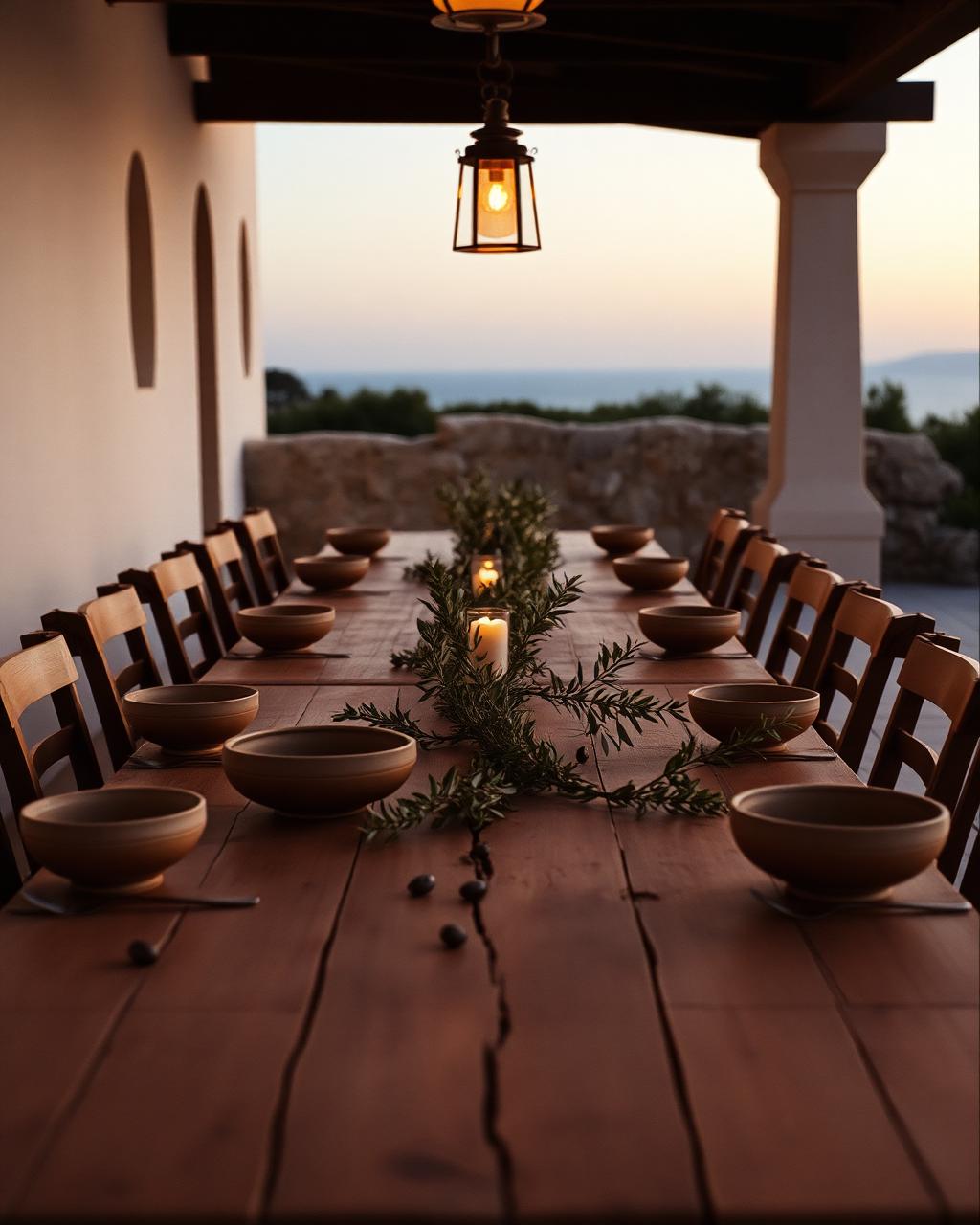
The Sicilian table I was raised at – Nonna Rose's table, with its chipped ceramic platters, its mismatched glasses, and its endless flow of warmth – was never about a specific place on a map. It was about a philosophy of living: with passion, with generosity, with an unwavering commitment to family, however that family is defined. It taught me that food is memory, that shared meals are the truest form of communion, and that the most nourishing dishes are those cooked with love, regardless of the recipe's origin.
When I finally stand in a Palermo market, smelling the same garlic and basil that perfumed my childhood, I suspect I won't feel like I'm discovering something new. I'll feel like I'm coming home to a place I've always known. And that, I think, is the most beautiful kind of heritage travel there is.