How to Plan a Heritage Tour: From Family Records to Real Itinerary
Heritage tours bridge what you know on paper with where your ancestors actually lived. After seventeen generations of my own research, this is the framework I use to turn records into a trip that feels like coming home — even when you've never been there before.

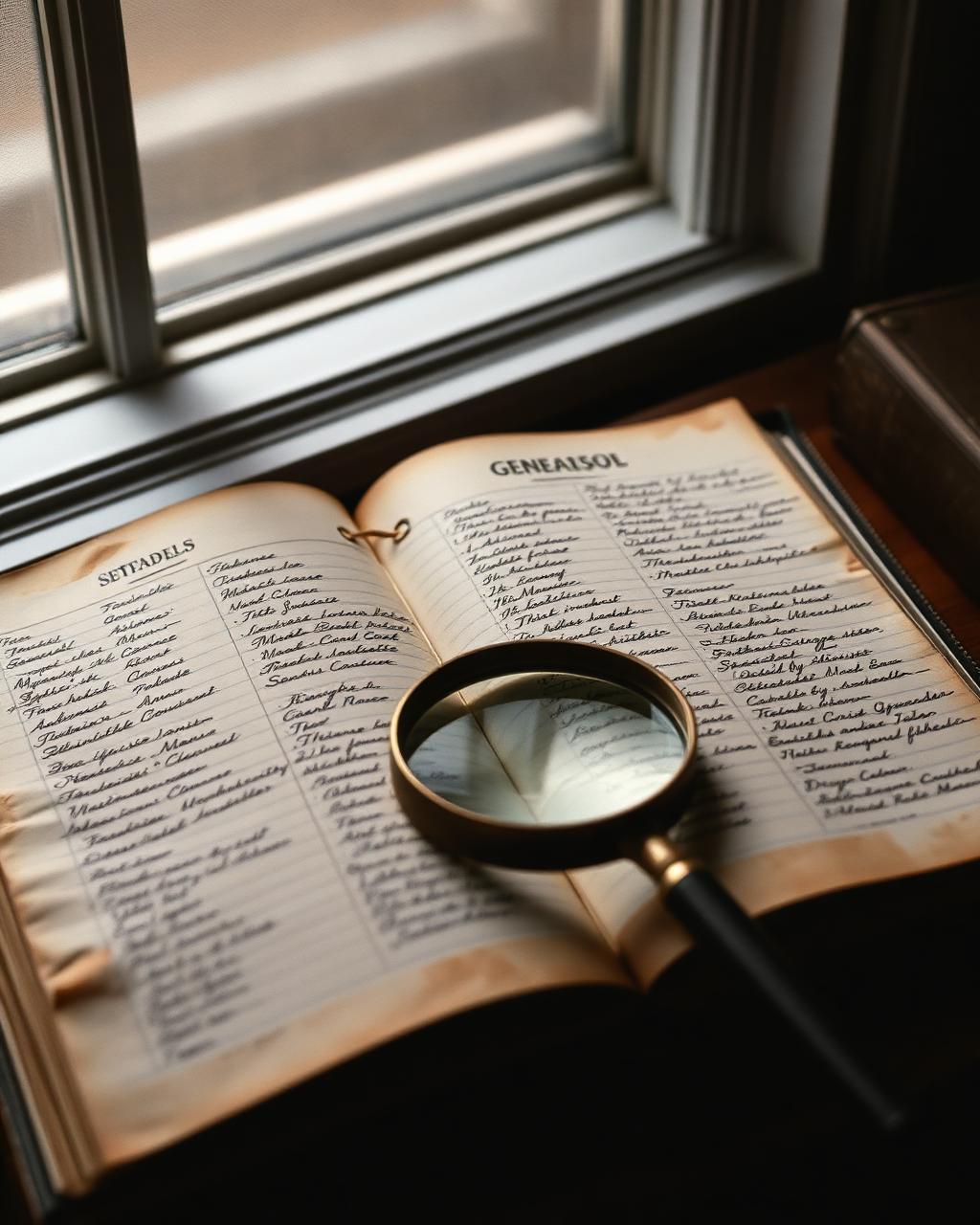
Most people assume a heritage tour starts with a plane ticket. It doesn't. It starts with a record — a census line, a baptismal entry, a ship manifest, a faded photograph with a place name written on the back in someone else's handwriting. The travel is the last step, not the first.
After seventeen generations of my own genealogical research, I've learned that the most meaningful heritage trips are not the ones that cover the most ground. They are the ones that know exactly what question they are trying to answer. This is the work I do before I ever book a flight.
I call it the Roots & Revelations framework. It is not a tour package. It is a way of moving from the paper archive to the physical landscape without losing the thread that connects them.
Step 1: Name the Question, Not Just the Place
A heritage tour becomes overwhelming the moment it tries to honor every ancestor at once. The records are too many. The branches spread too wide. The emotional weight of a whole family tree cannot be carried in a single itinerary.
So I start with one question.
It might be: Where did my great-great-grandfather live before he boarded the ship? Or: What church did my grandmother attend before the family moved north? Or: What landscape shaped the people whose choices eventually shaped me?
A single question gives the trip a spine. It turns genealogy from a sprawling database into a story. And it makes every decision after — which town, which archive, which guide, which day trip — easier to evaluate. If an activity helps answer the question, it stays. If it is merely interesting, it waits for another journey.
Step 2: Build the Record Layer Before the Route
Before I map anything, I gather the documents that will travel with me. This layer includes:
- Vital records: Birth, marriage, death, and baptismal certificates with exact locations and dates.
- Census records: These show street addresses, neighbors, occupations, and multi-generation households.
- Immigration and naturalization papers: Ship manifests, border crossings, and passport applications often contain villages of origin that other records miss.
- Military records: Draft cards, pension files, and service records can reveal places and movements.
- Family papers: Letters, diaries, photographs, and funeral programs carry details no archive will ever hold.
I organize these by location. Not by ancestor. By place. This is the key shift. When you plan a heritage tour, the ancestor is the reason; the place is the structure.
For each location, I note what I know, what I still need to confirm, and what I want to see. This becomes a location dossier. It travels in my phone, my notebook, and sometimes as printed copies for archivists and guides who need to see the original references.
Step 3: Move from County to Village to Street
A common mistake is stopping at the country level. I am Italian, so I will go to Italy. That is a heritage trip in name only. A heritage tour needs to reach the village, the churchyard, the street, the farm boundary, the address.
The deeper I can go, the more the trip becomes specific. Specificity is what separates a heritage tour from a vacation with a family story attached to it.
I use a simple hierarchy:
- Country or region — the broad context.
- County or province — the administrative and historical context.
- Town or parish — where records were created and neighbors were buried.
- Street or property — the precise place where daily life occurred.
Each level requires a different kind of preparation. At the town level, I contact local archives, churches, historical societies, and genealogists. At the street level, I use old maps, land records, and sometimes Google Earth to understand what still exists and what has been lost.
Step 4: Decide What Kind of Presence You Need
There are different ways to stand in an ancestor's place. I decide beforehand which one this trip is for.
- Archival presence: Visiting a church, courthouse, or archive to hold the original record.
- Landscape presence: Standing in the village, the field, or the harbor where the person lived, worked, or departed.
- Ritual presence: Lighting a candle, leaving a stone, reading a name aloud at a gravesite.
- Community presence: Meeting a local historian, a distant cousin, or a keeper of the local memory.
One trip might hold all four. Another might only need one. Knowing the difference prevents the pressure to "do everything" and allows the trip to be honest about what it is.
Step 5: Leave Room for the Unknown
The best heritage tours leave unscheduled space. Not because you will find something unexpected — though you often do — but because the emotional weight of the work needs time to land. A cemetery in the morning may require a quiet afternoon, not a museum visit. A record in an archive may change the entire itinerary for the next day.
I build in what I call "revelation days." These are days with one anchor appointment and the rest left open. The anchor might be a meeting with a local genealogist, a church visit, or a scheduled archive appointment. The open time is for what surfaces because of it.
Step 6: Work with the Right People on the Ground
A local guide is not optional for a serious heritage tour. General tour guides can manage the sites; heritage tours require people who understand records, ecclesiastical archives, local naming conventions, migration patterns, and the unspoken rules of small communities.
I look for:
- Professional genealogists based in the target region.
- Local historical society volunteers with deep parish knowledge.
- Specialized heritage tour operators who work with family historians.
- Cousins or local contacts who have already done the work and are willing to share.
I also book these relationships before I book hotels. A good genealogist on the ground can save days of frustration and can open doors — parish priests, municipal archivists, private cemeteries — that a typical traveler cannot access.
Step 7: Bring the Right Tools
My essential kit is lighter than people expect.
- Digital records: PDFs of all key documents, stored offline and in the cloud.
- Family tree snapshot: A printed or simplified chart that shows only the branch relevant to this trip.
- Contact list: Archivists, genealogists, churches, and accommodations with addresses and phone numbers.
- Notebook for field notes: Not everything should be typed. Some impressions need handwriting.
- Small gifts: For archivists, church staff, or local contacts who go out of their way. Good chocolate, local coffee, or a handwritten note from your family travels well.
Step 8: Let the Trip Change the Story
A heritage tour is not a confirmation exercise. It is a research method. Sometimes the trip disproves what you thought. A church record may show a different birthplace. A local historian may explain that the family name was spelled differently. A gravestone may reveal a child you never knew existed.
This is not failure. This is the revelation part of Roots & Revelations. The point of going is not to find what you already know. The point is to let the place speak back to the paper.
What Makes a Heritage Tour Different
Heritage tours differ from genealogy tourism because they are not just about finding names. They are about inhabiting the space between what was recorded and what was lived. They are about recognizing that your ancestors were not just entries in a database; they were people who woke up to specific weather, walked specific streets, made decisions under specific pressures.
The tour is the body catching up to what the mind has already learned. And when it works, it feels less like travel and more like a conversation across time.
A Final Note for Travelers
You do not need to be a professional genealogist to plan a heritage tour. You need curiosity, patience, and a willingness to follow one thread deeply rather than many threads quickly. Start with what you know. Ask one clear question. Let the records guide you to a place, and let the place teach you what the records never could.
If your research is deep enough, the itinerary almost plans itself. If it is not, the trip becomes a reason to go deeper. Both outcomes are worthwhile.
The only mistake is treating heritage travel as a sightseeing add-on. Your ancestors did not live in a brochure. They lived in a specific place, at a specific time, with specific fears and hopes. A real heritage tour honors that specificity. And when you stand there — in the church, at the harbor, on the street where they once stood — you are not just visiting history. You are finally meeting it.
Questions travelers ask.
What is a heritage tour?
A heritage tour is a trip planned around your documented ancestry — the villages, parishes, addresses, and archives where your ancestors actually lived. Unlike ordinary genealogy tourism, a heritage tour is anchored in specific records and aims to connect paper research to physical places.
How is a heritage tour different from a genealogy vacation?
Genealogy vacations tend to stop at the country level and cover many branches at once. A heritage tour narrows to one clear question, moves from country to county to village to street, and pairs archival visits with landscape, ritual, and community presence.
How far in advance should I plan a heritage tour?
Serious heritage tours are usually planned three to nine months out. That window gives time to gather vital records, contact local archives and parishes, book a specialist genealogist or guide on the ground, and align travel dates with archive hours and community events.
Do I need a professional genealogist to plan a heritage tour?
You do not need to be a professional genealogist, but you almost always need one on the ground. Local genealogists understand parish archives, naming conventions, and access to records that visiting travelers cannot easily reach on their own.
What records should I bring on a heritage tour?
Bring digital and printed copies of vital records, census entries, immigration and naturalization papers, military records, and any family letters or photographs. Organize them by location rather than by ancestor so each town has its own dossier.
Can I plan a heritage tour if I only know the country my family is from?
Yes, but the first phase of the trip becomes research rather than pilgrimage. Use the framework in this guide to build the record layer first, then use the trip to reach the village or parish level where the story actually lives.