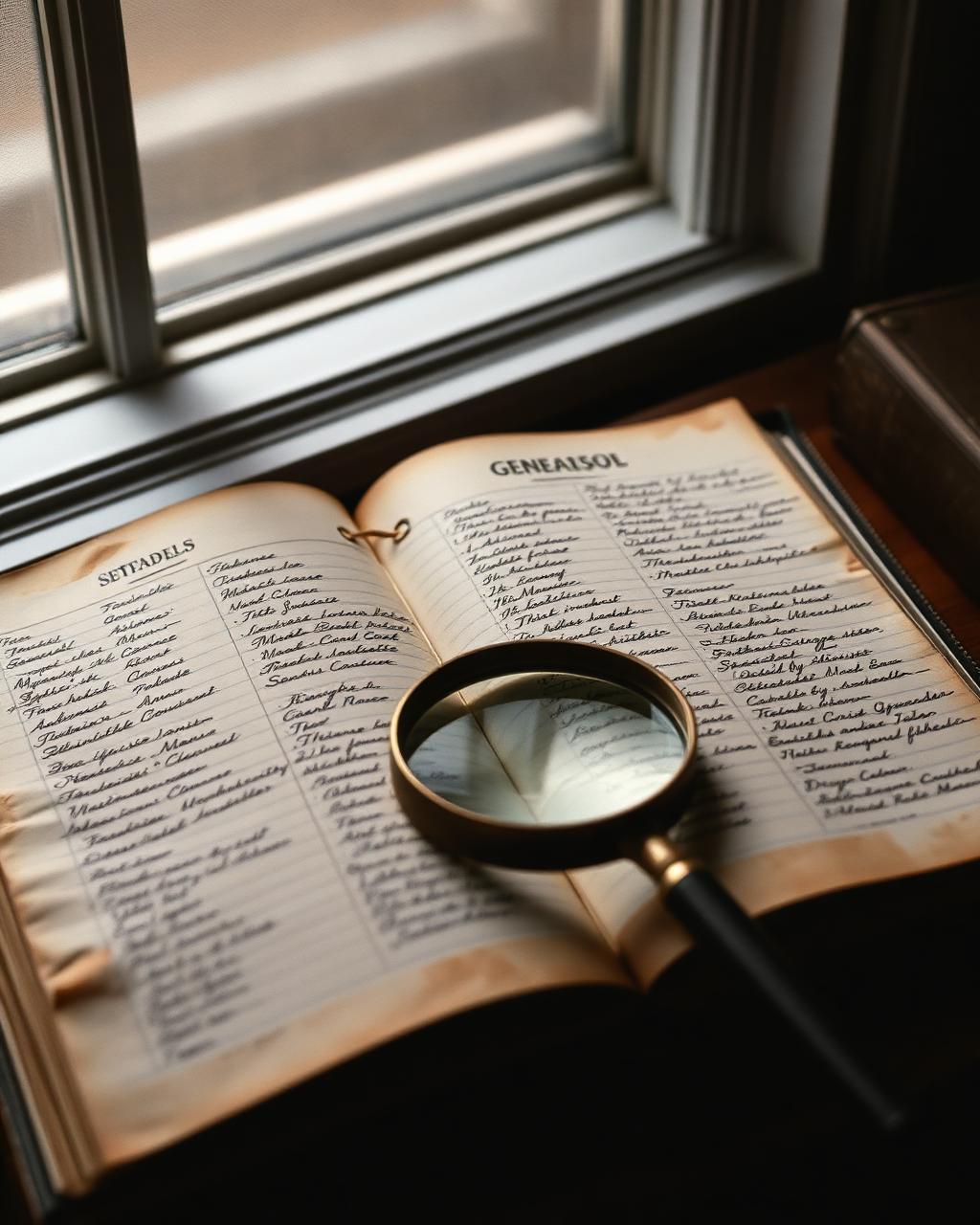
Heritage Travel When the Records Stop: Searching for Ancestry in Montreal, France, England & Spain
What happens when genealogical records hit a dead end — and you travel anyway? I visited four countries chasing fragmented family lines, learning that sometimes the search itself is the inheritance.

Heritage Travel When the Records Stop: Searching for Ancestry in Montreal, France, England & Spain
The cobbled streets of Old Montreal shimmered under a soft, late-autumn rain, each reflection a blurred echo of history. I pulled my scarf tighter, the chill seeping into my bones, a familiar feeling that had less to do with the weather and more with the quest that had brought me here. A quest that, truthfully, began long before this particular journey, but often felt like chasing a wisp of smoke in the wind. My breath plumed in the cool air, a visible sign of my presence, a stark contrast to the invisible lives I was trying to trace.
I'd come to Montreal, not for its famed poutine or its vibrant arts scene – though I'd enjoy those too – but because a faint, tantalizing whisper in a genealogy report hinted at a potential, albeit unconfirmed, French Canadian link in my maternal line. A fragmented oral tradition, a census record with an unexplained "French" designation, a surname that flickered between English and something more Romance. For Black Americans, these whispers are often all we have. The brutal, unsystematic dehumanization of slavery didn't just strip our ancestors of their names and languages; it meticulously erased their origins, severing the ancestral ties that so many others take for granted.
The Echoes Beyond the Records: When Memory Becomes Geography
This journey wasn't about verifying a single name or finding a lost cousin. It was about feeling. It was about standing in a place where my ancestors might have been, absorbing the air they might have breathed, walking the land they might have traversed. Genealogical tourism, to me, is about the verifiable, the documented proof. Heritage travel, on the other hand, embraces the liminal space where documentation ends, and intuition, cultural memory, and geographical connection begin.
For so many of my clients, especially Black Americans, the desire to connect with their roots is profound. They come to me, often with the results of a DNA test or a few generations of family history, wanting to know: "Where do I go when the records stop?" My answer is always the same: "You go anyway." You go where the DNA suggests, where oral tradition points, where the threads of history, however tangled, lead you. You understand that the journey itself is the answer, not just the destination.
My own quest led me to hypothesize about four key ancestral landscapes: Montreal for a French Canadian possibility, France for its broader colonial ties to North America, England for the pervasive influence of the British Empire on the transatlantic slave trade and American South, and Spain, given the fluidity of colonial powers in the Caribbean and Southern U.S.
Montreal: A Glimmer of French North America
My first stop on this extended pilgrimage was Montreal. The city offers an undeniable charm, a European sensibility nestled within North America. My days were a rhythm of exploring historical sites and then diving into archives. The McCord Museum offered insights into early French Canadian life, while the Pointe-à-Callière Archaeology and History Complex brought the city's origins to life from pre-colonial times.
The specific challenge in Montreal, when searching for Black ancestry, lies in the historical invisibility of enslaved or free Black populations in early colonial records. While not as extensive as in the American South or the Caribbean, there were Black individuals in New France, often working in homes, ports, and farms. I spent hours at the Bibliothèque et Archives nationales du Québec, poring over microfiches, old parish records, and notary documents. I worked with a local archivist, a kind woman with a keen interest in overlooked histories.
I didn't find a direct hit. But I found clues. Mentions of "domestics," ambiguities in census records, records of Indigenous enslavement that sometimes conflated with African identities. More importantly, I felt a connection. Standing on the banks of the mighty St. Lawrence River, watching ships pass, I considered the possibility that an ancestor, perhaps enslaved, perhaps free but seeking a new life, might have seen these very waters.
La Belle France: Echoes of Empire
From Montreal, my journey took me across the Atlantic to France. France's colonial footprint in North America, particularly in the Caribbean and Louisiana, directly shaped the lives of countless enslaved people whose descendants are now Black Americans. My exploration focused on cities with historical ties to colonial trade – Nantes, Bordeaux, and Paris.
Nantes, in particular, was a revelation. It was a major port city involved in the transatlantic slave trade, and while the city has done significant work in acknowledging this painful history, it's still a journey for them. The Memorial to the Abolition of Slavery along the Loire River is a powerful, somber space. Walking through its underground passages, etched with the names of slave ships and their human cargo, was heart-wrenching.
In Bordeaux, another major port, I visited various archives and local historical societies. I learned about the Code Noir, the brutal legal framework regulating slavery in French colonies. French archives, I found, are meticulously organized but require a deep understanding of French historical administration and the language itself.
What struck me most profoundly in France was the pervasive influence of French culture and legal frameworks on the lives of Africans in its colonies. Even in absence of a definitive name, understanding the system that governed their lives offered a profound, if painful, new layer of understanding to my family's story.
Across the Channel: England's Unseen Hands
My next exploration led me to England. The sheer scale of British involvement in the transatlantic slave trade, its imperial reach, and the enslavement of Africans in its American colonies are undeniable facts that shaped the very fabric of my family's heritage.
London was my base. I spent significant time at The National Archives at Kew, a veritable treasure trove of British imperial records. I delved into plantation records from British colonies in the Caribbean and North America, maps of trade routes, documents related to slave ship manifests, and records of compensation paid to enslavers after abolition.
The emotional impact of standing in the very places where decisions were made that shaped the destinies of millions, including my ancestors, was staggering. It wasn't just about the records; it was about feeling the weight of empire, the casual cruelty embedded in economic transactions, the sheer audacity of asserting ownership over human beings.
The Iberian Peninsula: A Distant Echo from Spain
Finally, my journey took me to Spain. A distant genetic marker and the historical fluidity of colonial powers in the Caribbean suggested a possible Iberian connection. Spain's role in the early transatlantic slave trade, its vast colonial empire, and the complex racial dynamics of its American colonies made it a compelling, if somewhat daunting, destination.
In Seville, I visited the Archivo General de Indias, a UNESCO World Heritage Site housing millions of documents related to Spain's colonial empire. The sheer volume was overwhelming. With the help of a local historian specializing in Afro-Hispanic studies, I explored records pertaining to enslaved populations in the Spanish Caribbean. We sifted through records of slave ships arriving in Havana, lists of enslaved individuals categorized by "casta," and documents from sugar plantations.
The experience in Spain was perhaps the most intellectually stimulating, even if the least emotionally intimate. It broadened my understanding of the global network of the slave trade, the interconnectedness of European empires, and the sheer scale of the displacement of African peoples. It taught me that my ancestors' story wasn't confined to one colonial power; it was a transnational, multi-century saga.
Practical Guidance: Navigating Archives in Different Countries
For anyone embarking on a similar genealogical pilgrimage, here is hard-won practical advice:
Before You Go:
- Hire a professional genealogist who specializes in your region of interest. This is non-negotiable. They can pre-identify potential records, navigate complex archival systems, and save you weeks of fruitless searching.
- Learn the basics of the local language. Even rudimentary French, Spanish, or understanding archival terminology will immensely aid your research.
- Digitize everything. Bring a laptop, a good camera, and portable hard drives. Many archives allow photography but not photocopying.
- Set realistic expectations. You may not find a definitive ancestor. Prepare emotionally for ambiguity.
In the Archives:
- Be patient and respectful. Archivists are invaluable allies. Explain your research clearly, ask for guidance, and be prepared for slow processes.
- Understand cataloging systems. Each country, and often each archive within a country, has its own organizational logic. Take time to understand it before diving in.
- Look beyond the obvious. Parish records, notary documents, land deeds, military records, and even tax rolls can contain unexpected mentions of individuals of African descent.
Emotional Preparation:
- Acknowledge the weight. You are researching a history of violence, displacement, and dehumanization. This is inherently emotional. Allow yourself to grieve, to be angry, to be confused.
- Build in decompression time. Don't schedule archive visits back-to-back. Allow yourself days to walk, explore, eat, and simply be in the place.
- Talk to someone. A therapist, a trusted friend, a fellow heritage traveler. Processing these experiences is vital.
What I Carry Home: The Inheritance of the Search
I didn't return from Montreal, France, England, or Spain with a neatly completed family tree. I didn't find a specific ancestor's name etched in stone, or a portrait hanging in a forgotten gallery. What I found was something arguably more valuable: a deeper understanding of the forces that shaped my family's existence, and a profound appreciation for the resilience of those who came before me.
The records may stop, but the human story never does. The search itself is the inheritance. Each archive visited, each cobblestone walked, each tear shed in a foreign land, adds a layer of understanding and connection that no document can provide. It's a testament to the enduring human need to know where we come from, and the remarkable courage it takes to seek that knowledge, even when the answers are elusive.
For my clients, I carry this fundamental truth: heritage travel, at its core, is an act of love. It's love for the ancestors who survived, love for the cultures that endured, and love for the self that is constantly being shaped by these discoveries. When the records stop, that's not where the story ends. That's where the real journey begins.