Iceland in Four Days: What the Edge of the World Teaches You About Beginning
I was twenty-two, pressing my forehead against a cold airplane window. Below me, the world was turning into something I had no language for.
The hum of the engines softened as we descended. I pressed my forehead against the cool windowpane, watching the world outside transform. It was 2004, and I was twenty-two, fresh out of college, carrying a backpack that was too heavy and expectations that were too vague. Below me, Iceland was emerging from cloud cover like a secret being told — vast, treeless, impossibly green and brown and gray all at once. Rivers braided across the landscape like silver veins. There was snow on distant peaks, steam rising from somewhere I couldn't identify, and not a single tree as far as I could see. I remember thinking: this doesn't look like anywhere. It looks like the beginning of somewhere.
The Weight of a First Real Journey
Iceland was one of my earliest international trips, and I didn't fully understand at the time what it was doing to me. I was young, unformed as a traveler, operating on instinct rather than strategy. I didn't know yet that I would visit 49 territories. I didn't know I would work at Delta, then Westin, then build a career as a travel advisor. I just knew that something about being in a place this alien, this raw, this indifferent to my presence, felt important.
Looking back now, with twenty years of travel behind me, I can see Iceland for what it was: a threshold. Not just my first encounter with dramatic landscape, but the moment I began to understand that travel isn't about comfort or confirmation. It's about being small in a vast place and finding that the smallness doesn't diminish you — it clarifies you.
Reykjavik: A City That Doesn't Pretend
Reykjavik in 2004 was quieter than the version tourists encounter today. The craft beer scene hadn't yet exploded, the Instagram-famous hot dog stand wasn't yet a pilgrimage site, and the city felt more like a well-kept secret than a destination. What struck me immediately was its honesty — colorful corrugated iron houses, a modest church on a hill, streets that emptied by ten on a weeknight.
I wandered Laugavegur, the main shopping street, browsing wool shops and bookstores. I ate lamb soup in a small restaurant where the owner asked where I was from and seemed genuinely interested in the answer. I visited Hallgrímskirkja, the iconic church whose columns mimic basalt formations, and took the elevator to the top for a view of the city that made it look like a toy village arranged by careful hands.
What I remember most about Reykjavik is the light. In early summer, it never fully darkened. The sky shifted through blues and golds and pale pinks but never went black. It was disorienting and beautiful, and it made sleep feel like an interruption of something more important.
The Golden Circle: Earth in Motion
The Golden Circle — Þingvellir, Geysir, and Gullfoss — is the most popular day trip in Iceland, and for good reason. Even as a twenty-two-year-old with limited context, I understood I was seeing something extraordinary.
At Þingvellir, I stood in the rift valley where the North American and Eurasian tectonic plates are pulling apart. The earth is literally splitting here, slowly, imperceptibly, but undeniably. The ancient Icelandic parliament, the Althing, was established here in 930 AD, making it one of the oldest parliamentary sites in the world. Standing in that valley, I felt the weight of both geological and human time.
Geysir, the original geyser that gave all geysers their name, was dormant during my visit, but nearby Strokkur erupted faithfully every few minutes — a violent column of boiling water shooting twenty meters into the cold air. The crowd would gather, wait, tense, and then the earth would exhale, and everyone would gasp as if surprised, even though we'd just watched it happen five minutes before.
Gullfoss, the massive two-tiered waterfall, was the day's crescendo. The sheer volume of water cascading into a narrow canyon, the mist catching rainbows in the low-angled sun, the roar that made conversation impossible — it was the most powerful natural force I had encountered in my young life.
The Blue Lagoon: Before It Was Famous
The Blue Lagoon in 2004 was a different experience than what it has become. It was popular, certainly, but not yet the meticulously designed luxury spa complex it is today. I remember it as more raw — milky blue water steaming in a black lava field, the mineral-rich silica mud you could scoop from the bottom and smear on your face, the surreal contrast of hot water and cold air.
I floated for what felt like hours, staring at the sky, feeling the geothermal heat seep into muscles I didn't know were tense. It was one of the first times in my life I experienced true physical surrender — not relaxation as performance, but genuine letting go. The landscape around the lagoon, all sharp black rock and moss, looked like another planet. I couldn't reconcile it with anything I'd seen before.
How Iceland Shaped Me
I didn't become a travel advisor because of Iceland. The path was longer and more winding than that. But Iceland planted something — a seed of understanding that the most meaningful travel experiences aren't the ones that confirm what you already know, but the ones that show you how much you don't.
Iceland taught me that landscape can be a teacher. That silence has texture. That being uncomfortable — cold, disoriented, far from anything familiar — is not the opposite of a good trip but often the essence of one. These are principles I now bring to every client consultation, every itinerary I build, every piece of advice I give.
When a client tells me they want to "go somewhere different," I always ask: different from what? Different from other vacations? Different from your daily life? Or different from your idea of what travel should be? Iceland was the first place that was different from my idea of what the world looked like. And that kind of different changes you.
Practical Wisdom for Four Days
Day 1: Arrive in Reykjavik, explore the city on foot. Visit Hallgrímskirkja, browse Laugavegur, eat lamb soup. Don't fight the jet lag — embrace the long light.
Day 2: Golden Circle day trip. Þingvellir, Geysir, Gullfoss. Start early, take your time, bring layers.
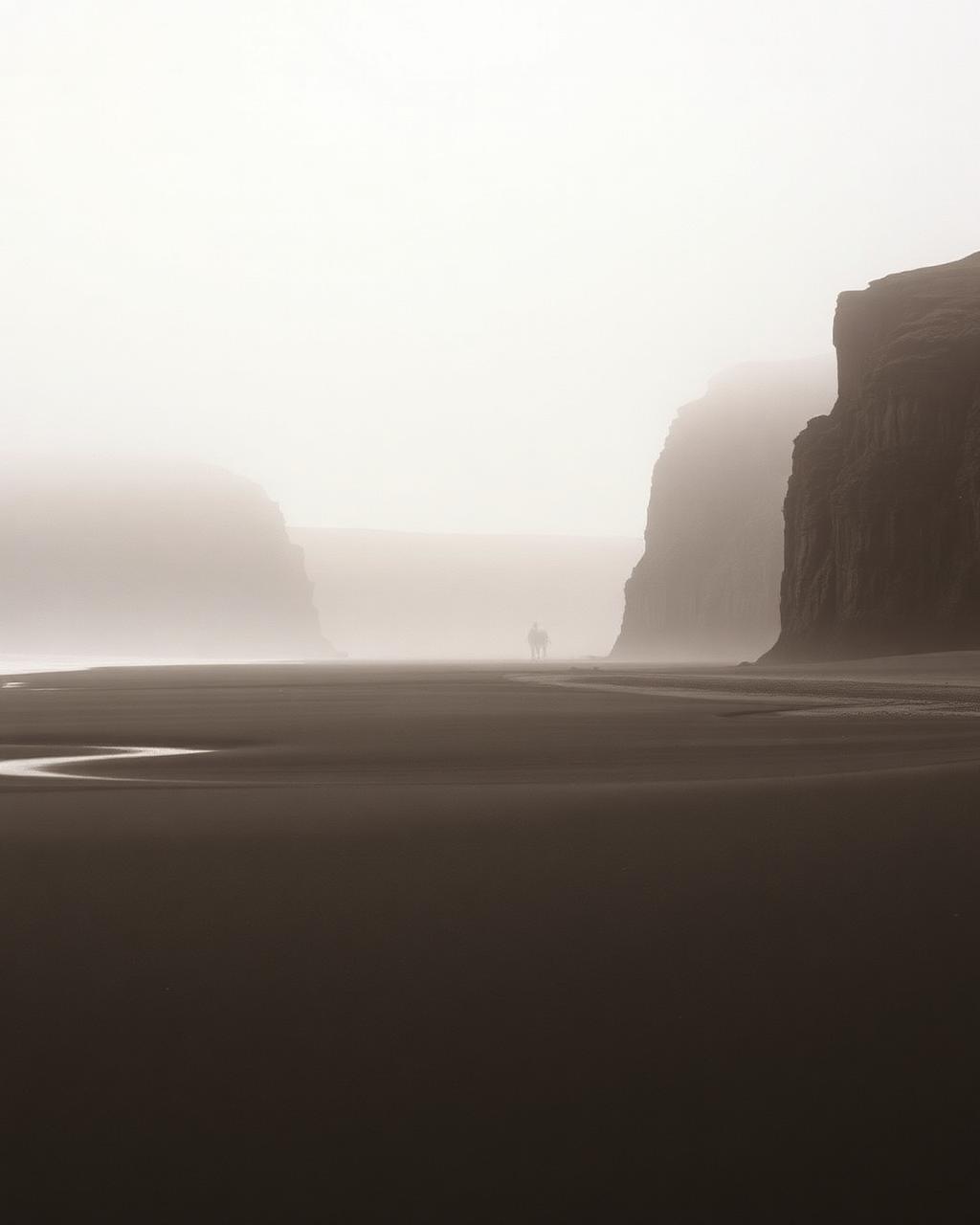
Day 3: South Coast drive — Seljalandsfoss and Skógafoss waterfalls, Reynisfjara black sand beach. This is Iceland at its most dramatically beautiful.
Day 4: Blue Lagoon (book well in advance), then fly home. Or, if your schedule allows, add a whale-watching tour from Reykjavik harbor.
When to go: June through August for the midnight sun and the mildest weather. September for northern lights and fewer crowds. Winter is dramatic but demanding — short days, icy roads, limited accessibility.
Costs: Iceland is expensive. Budget accordingly. Groceries and cooking in your accommodation can help offset restaurant costs. Fuel is pricey but distances are manageable for a four-day trip.
What Beginnings Teach You
I've been to 49 territories since Iceland. I've seen grander architecture, eaten more refined food, experienced warmer hospitality. But I have never again felt quite the same thing I felt standing at Gullfoss at twenty-two, watching the earth do something impossible and beautiful and entirely indifferent to whether I was there to see it.
Beginnings have a particular quality. They are unfinished, uncertain, full of potential energy. Iceland was my beginning — not of travel itself, but of traveling with attention, with openness, with the willingness to be changed. Twenty years later, I understand that the edge of the world isn't a place. It's a state of readiness. And Iceland is where I learned to stand in it.