Greece Beyond the Postcards: The Aegean as It Actually Lives
The Aegean sun delivers a specific kind of warmth — golden, honeyed, ancient. I watched Serifos sharpen into view from the ferry railing and knew this was not the Greece of the brochures.
The Aegean sun, even in late September, delivers a specific kind of warmth – a golden, honeyed embrace that feels both ancient and utterly new. My first true sensation of Greece, after the predictable hum of the airplane engines and the chaotic dance of Athens airport, was the soft thrum of the ferry cutting through impossibly blue water, heading towards Serifos. The air carried a faint, sweet aroma – wild oregano perhaps, or some other hardy, sun-baked herb. I leaned against the railing, the wind whipping strands of my braids across my face, watching the distant silhouette of the island grow sharper with each passing nautical mile. It wasn't the iconic caldera of Santorini, nor the whitewashed whirl of Mykonos. It was something quieter, craggier, more themselves. This wasn't the Greece I'd seen on countless travel brochures. This was a living, breathing place, already demanding my full attention.
Beyond the Postcard: Greece as It Actually Lives
For years, Greece has been sold to us as a fantasy – an immaculate tableau of whitewashed walls, sapphire seas, and perpetually smiling models. It's the land of postcard perfection, a curated dreamscape where every moment is Instagram-ready. And yes, those things exist. The light is extraordinary. The water is that shade of cerulean. But to reduce Greece to this carefully constructed ideal is to miss the very essence of its profound beauty.
What I discovered in 2023 was a Greece that is gloriously, unapologetically lived-in. It is noisy, bustling, occasionally chaotic. There are cracked pavements, stray cats weaving through outdoor tavernas, and ancient walls bearing the marks of centuries. It is imperfect, and it is precisely this imperfection that makes it so utterly captivating. The beauty isn't just in the dramatic sunsets; it's in the way the local baker greets you with a hearty "Kalimera!", in the tenacious olive trees clinging to arid hillsides, in the effortless rhythm of island life that has endured for millennia.
Island Stories: A Deeper Dive into the Aegean
Serifos: The Untamed Heartbeat
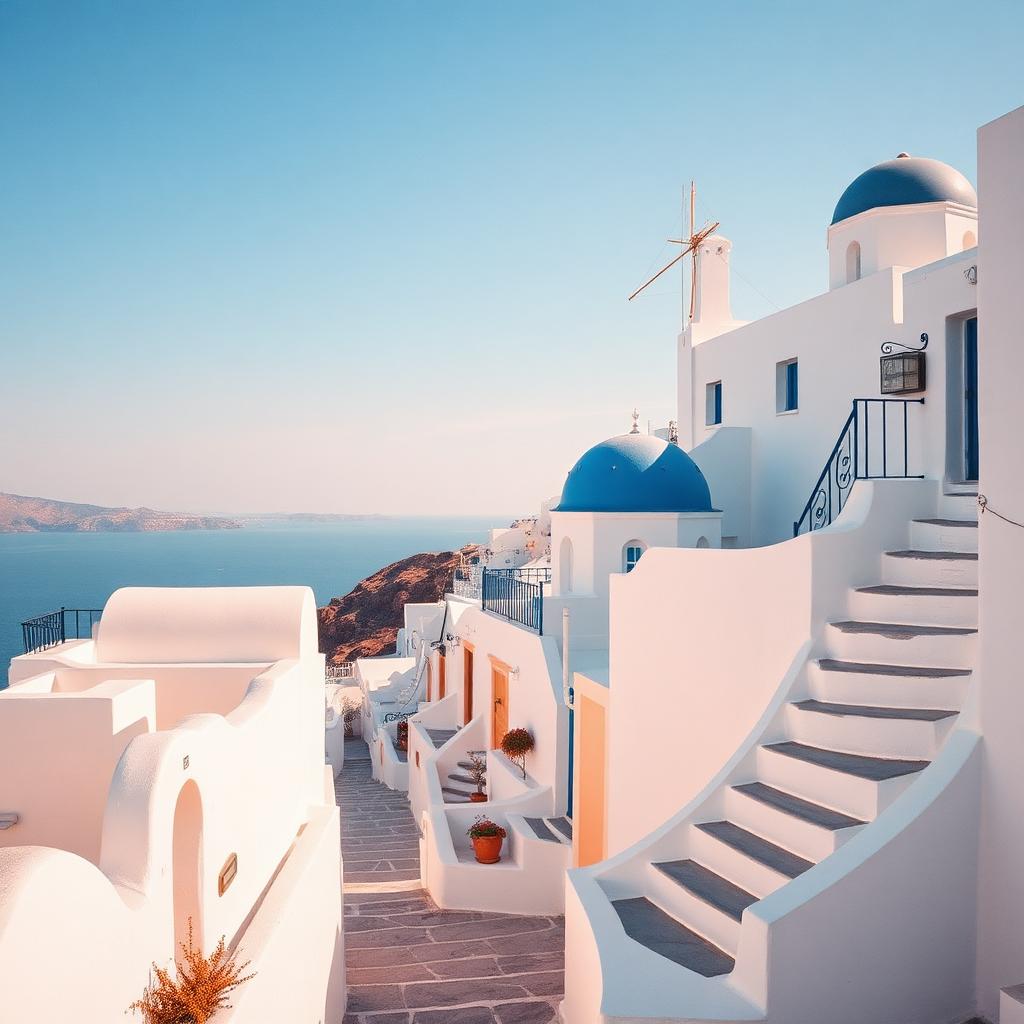
My journey began in Serifos, a decision I now consider a foundational stroke of genius. Unlike its more famed neighbors, Serifos keeps its charms cloaked in a rugged, unassuming grace. The main port, Livadi, is a charming introduction, with its curve of beach and waterfront tavernas. But the real magic lies beyond, winding up the serpentine road to Chora. Perched dramatically on a rocky outcrop, overlooking the Aegean, Serifos' Chora is a breathtaking example of Cycladic architecture at its most unadorned — a labyrinth of narrow, whitewashed alleys, stairs that seem to lead nowhere and everywhere, and unexpected bursts of bougainvillea.
I spent hours simply wandering. There's no grand archaeological site here, no flashy boutiques. Instead, you find quiet courtyards, a local woman sweeping her stoop, the clang of a church bell echoing across the valley. One evening, after a bracing swim at Psili Ammos beach, I found myself at a small, family-run taverna. The matriarch brought out plate after plate: slow-cooked lamb, wild greens, crisp fried zucchini. We communicated with smiles and gestures, and I felt not like a visitor, but like a welcomed guest.
Sifnos: The Culinary Soul
From Serifos, a short ferry hop brought me to Sifnos, an island renowned throughout Greece for its culinary prowess and traditional pottery. Apollonia, the island's capital, maintains that quintessential Cycladic charm. I fell into a rhythm of morning walks through the village, stopping for a strong Greek coffee and a kalasouna before heading out to explore.
Kastro, a medieval village perched on a rocky bluff overlooking the sea, was a particular highlight. Walking its ancient paths, built literally along the cliffs, felt like stepping back in time. But it was the food that truly sang on Sifnos. I sought out a cooking class at a small farm, learning to make revithada, the island's signature chickpea stew, traditionally slow-cooked overnight in a clay pot in a wood-fired oven. The process was meditative, the aroma intoxicating, and the taste was pure comfort.
Paros: The Polished Charm
After the rustic authenticity of Serifos and the culinary delights of Sifnos, Paros offered a more polished, yet still authentic, island experience. It's larger, more bustling, and undeniably popular, but it retains its innate Greek charm. Parikia, the main port, is a beautiful tangle of whitewashed streets, Venetian mansions, and the impressive Panagia Ekatontapiliani. But the true gem was Naoussa — a picturesque fishing village with a tiny, bustling harbor filled with colorful caiques. At night, the waterfront transforms into a vibrant dining scene, with tavernas spilling onto cobblestones, fresh catch glistening under strings of fairy lights.
My most cherished memories were contemplative moments: a walk through the Byzantine path between Lefkes and Prodromos, or sipping a sundowner overlooking the Aegean in Naoussa, watching the sky bleed into hues of orange and purple.
Athens: Laying the Foundation
Athens served as the essential prologue to my Greek saga. Some find it gritty and overwhelming; I find it electrifying. Athens is where millennia of history collide with the pulsating energy of a modern European capital.
The Acropolis and the Parthenon are non-negotiable. To stand beneath those legendary columns, witnessing the sheer human ingenuity and enduring spirit, is a moment that resonates deep within. But I also found immense pleasure in the less obvious experiences: strolling through the Plaka, navigating its maze of shops and tavernas; the smells of grilling souvlaki, the murmur of a dozen languages, the vibrant colors of artisan crafts.
My most memorable Athens experience was an evening in Exarcheia, the city's vibrant, graffiti-covered anarchist quarter. Here, amidst buzzing bars and independent bookshops, I stumbled upon a small, packed restaurant serving the most extraordinary moussaka. The air was thick with debate, laughter, and the clinking of wine glasses. It was gritty, unpredictable, and entirely real — a world away from the manicured tourist hotspots.
Practical Wisdom: Navigating the Aegean
Island-hopping logistics: The Greek ferry system is both remarkably efficient and a test of patience. Ferries connect almost every inhabited island, but schedules can be unpredictable. Book main routes in advance through Blue Star Ferries or Hellenic Seaways. For shorter hops between nearby islands, smaller, faster catamarans are often available. Always build in buffer days — a "weather day" is not uncommon.
When to go: Late September and October are my preferred months. The summer crowds have thinned, the water is still warm from months of sun, and the light is at its most golden. Avoid July and August unless you thrive in intense heat and crowded spaces. May and June offer wildflowers and pleasant temperatures.
What to skip: If your time is limited, consider skipping Santorini and Mykonos entirely. I know that sounds counterintuitive, but they are the most crowded and most expensive Cycladic islands. For a fraction of the cost and a tenth of the tourists, islands like Serifos, Sifnos, Milos, and Naxos offer equally stunning scenery with far more authentic encounters.
Packing: Layers are key, even in summer. Evenings on the islands can be windy and surprisingly cool. Comfortable walking shoes are essential — cobblestones are everywhere and many villages are built on steep hills. A good sunscreen and a wide-brimmed hat are non-negotiable.
Budget: Greece offers remarkable value compared to much of Western Europe. Meals at local tavernas are surprisingly affordable, and accommodation outside the peak season can be very reasonable. Ferries are moderately priced, and many of the best experiences — swimming in coves, hiking coastal paths, exploring villages — are entirely free.
The Aegean's Enduring Lesson
Leaving Greece felt like emerging from a vivid, deeply absorbing novel. Every island, every cobblestone street, every shared meal had contributed a chapter to a story I wasn't ready to finish. Greece taught me that beauty is not found in perfection, but in the honest, lived-in quality of a place that has weathered millennia and emerged, not pristine, but profoundly alive. It is the cracked plaster revealing ancient stone, the goat bell echoing across a sunlit valley, the spontaneous burst of laughter from a taverna at midnight.
As a travel advisor, I've guided many clients to Greece, often steering them towards these less-celebrated islands. The conversation is always the same: "Are you sure? Shouldn't we just do Santorini?" And my answer is always the same: if you want the postcard, go to Santorini. If you want Greece — the real, resonant, unapologetically imperfect Greece — let me show you the Aegean as it actually lives.