Walking Through Rome Alone, Carrying My Mother's Italy With Me
My mother never set foot outside the United States. But she built a magnificent, shimmering Italy from library books and PBS documentaries. I walked those streets for both of us.
Walking Through Rome Alone, Carrying My Mother's Italy With Me
The first blush of dawn over the Trevi Fountain is not a gentle awakening; it is an explosion of light. The marble, usually basking in golden streetlight glow, was catching the first sincere rays of a new Roman day, turning its water to liquid silver. I stood there, a lone figure in a sea of empty cobblestones. My hand instinctively sought the small photo in my pocket — a younger, vibrant version of my mother, her smile wide under a headscarf. This was not merely a tourist moment; it was a pilgrimage.
My mother never set foot outside of the United States. Her realm was our humble kitchen, the bustling aisles of the local grocery store, and the worn pages of library books. Yet within those confines, she built a magnificent, shimmering Italy. She spoke of it as if she had lived there — the sun scorching terracotta roofs, the robust scent of garlic and olive oil from open windows, the passionate intensity of Tuscan landscapes. Her Italy was not just a place; it was a feeling, a symphony of sensory details gathered from National Geographic magazines and PBS documentaries. "One day, baby girl," she would murmur. "I will walk those streets. I will taste the real cacio e pepe, strong and real."
That one day never came for her. But as I stood there, a Black woman alone in the hushed grandeur of Rome, I realized one day had arrived for me, and by extension, for her.
The Weight of Someone Else's Dream
Being a Black woman traveling alone in Rome adds another dimension to the experience. There is the usual thrill of independence, the freedom to follow your whims. But then there is the quiet awareness, the subtle dance of being other in a historically layered space. It is not necessarily overt hostility, more an invisible hum, a series of curious glances. I learned to navigate it, to meet gazes with a confident smile, to allow my joy to be my shield and my curiosity my guide. Rome was too grand, too absorbing, to shrink from.
The city, even at six in the morning, was already stirring. My first Roman breakfast was simple yet profound: an espresso, taken standing at a marble counter, a flaky cornetto clutched in my hand. The barista offered a swift "Buongiorno!" and a knowing nod. There was a rhythm here, a ritual — no lingering, no scrolling, just a potent jolt of caffeine, a moment of connection, and then back into the stream of life. This efficiency, this embrace of the present, felt deeply Italian, something my mother would have admired.
Trastevere and the Cacio e Pepe Pilgrimage
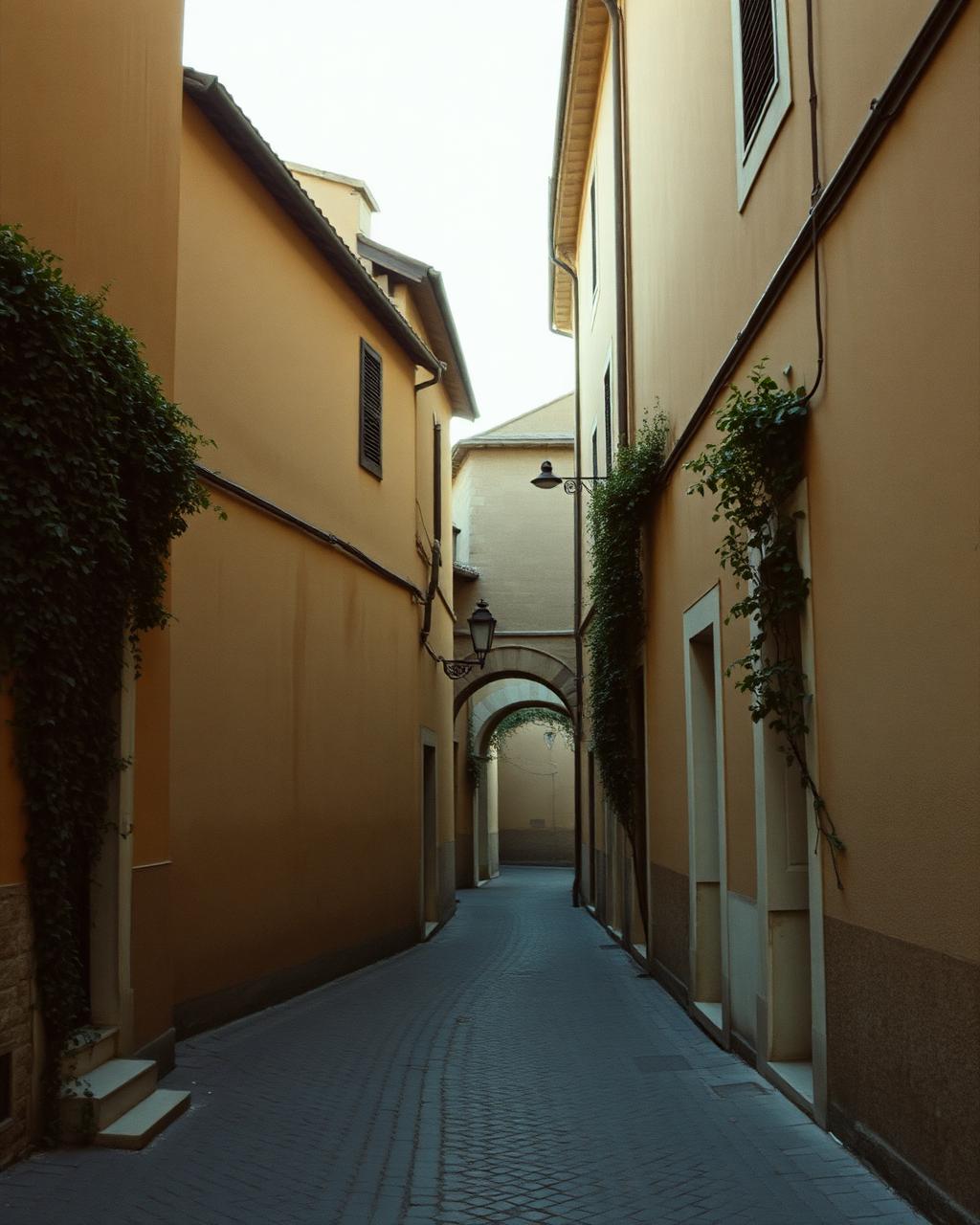
Food was the soul of my mother's imagined Italy. My pilgrimage took me to Trastevere, a neighborhood that felt like stepping into an oil painting — narrow winding streets, laundry hanging from balconies like colorful flags, the air thick with promise.
I found a small trattoria with a chalked-up blackboard menu. I ordered the cacio e pepe. When it arrived — a swirling mound of perfectly al dente pasta, glistening with Pecorino Romano and black pepper — it was more than a meal. The first bite was an explosion of savory richness, a surprising simplicity that spoke of centuries of wisdom. It was strong and real, just as she had described. I closed my eyes, and I could almost hear her chuckle. Each spoonful felt like a whispered conversation, a shared joy across continents and time.
The Colosseum and Vatican Through Fresh Eyes
When I stood before the Colosseum, its ancient walls scarred by time and history, I was not just seeing a monument. I was seeing it through her eyes. I imagined her, a young Black woman from the American South, gazing upon this testament to human ambition, her mind alight with questions and awe.
The Vatican felt like a journey to another realm. St. Peter's Basilica, with its soaring dome and intricate artistry, left me speechless. And the Sistine Chapel — to lie back and gaze at Michelangelo's masterpiece, the vibrant colors, the sheer scale — felt like an awakening. I thought of my mother, a devout woman, and how this would have moved her, how she would have traced the lines of every angel with a reverence deeper than mine. Here, the weight of her dream lifted, transformed into a lightness, a sense of shared completion.
The Everyday Magic
Beyond the monumental experiences, there were the everyday textures of Rome. The old woman selling flowers near a bustling market. The stray cat sunning itself on a broken marble column. The vibrant graffiti splashed across ancient walls, a collision of eras. These were the details that made Rome feel less like a postcard and more like a living, breathing entity.
Practical Rome Wisdom
Shoes are everything. Cobblestones are beautiful but unforgiving. Comfortable walking shoes are non-negotiable.
Embrace public transport. The metro and buses are efficient and an excellent way to observe local life. But also walk — Rome reveals itself best on foot.
Learn five phrases. Grazie, per favore, scusi, buongiorno, and un caffe per favore will carry you through most interactions with warmth.
Eat where locals eat. The best food is found in unassuming trattorias, not the tourist traps with laminated photo menus near major attractions.
Time your monuments. Early morning or late afternoon at major sites means fewer crowds and better light. The Colosseum at golden hour is worth the wait.
Get lost on purpose. Some of the most beautiful discoveries happen when you abandon the map. Rome rewards the curious and the open-hearted.
Carrying Her Forward
As my trip drew to a close, I stood once again at the Trevi Fountain, this time under a sky ablaze with sunset. I tossed in my coin. Not just for a return to Rome, though I dearly hoped for that, but for my mother. A silent prayer, a deep gratitude.
This journey had been more than a vacation. It had been a dialogue across generations, a bridge built with memory and love. I had walked through Rome alone, yes, but I had carried her Italy with me — in my heart, in my steps, in every taste and sight and sound.
Her dream had not been unfulfilled after all. It had simply been deferred, waiting for me to pick up the torch. And in doing so, I had not just experienced Rome. I had experienced a deeper connection to my mother, to my heritage, and to the profound power of human aspiration. That is a pilgrimage worth taking, a dream worth carrying, forevermore.