Train Travel Is Having a Moment: The Best New Rail Journeys Launching Through 2027
After years of flying for work at Delta, I understand exactly when a train is worth the extra time — and when it is not. Here are the rail journeys actually worth watching through 2027.
Train Travel Is Having a Moment: The Best New Rail Journeys Launching Through 2027
By Ariana
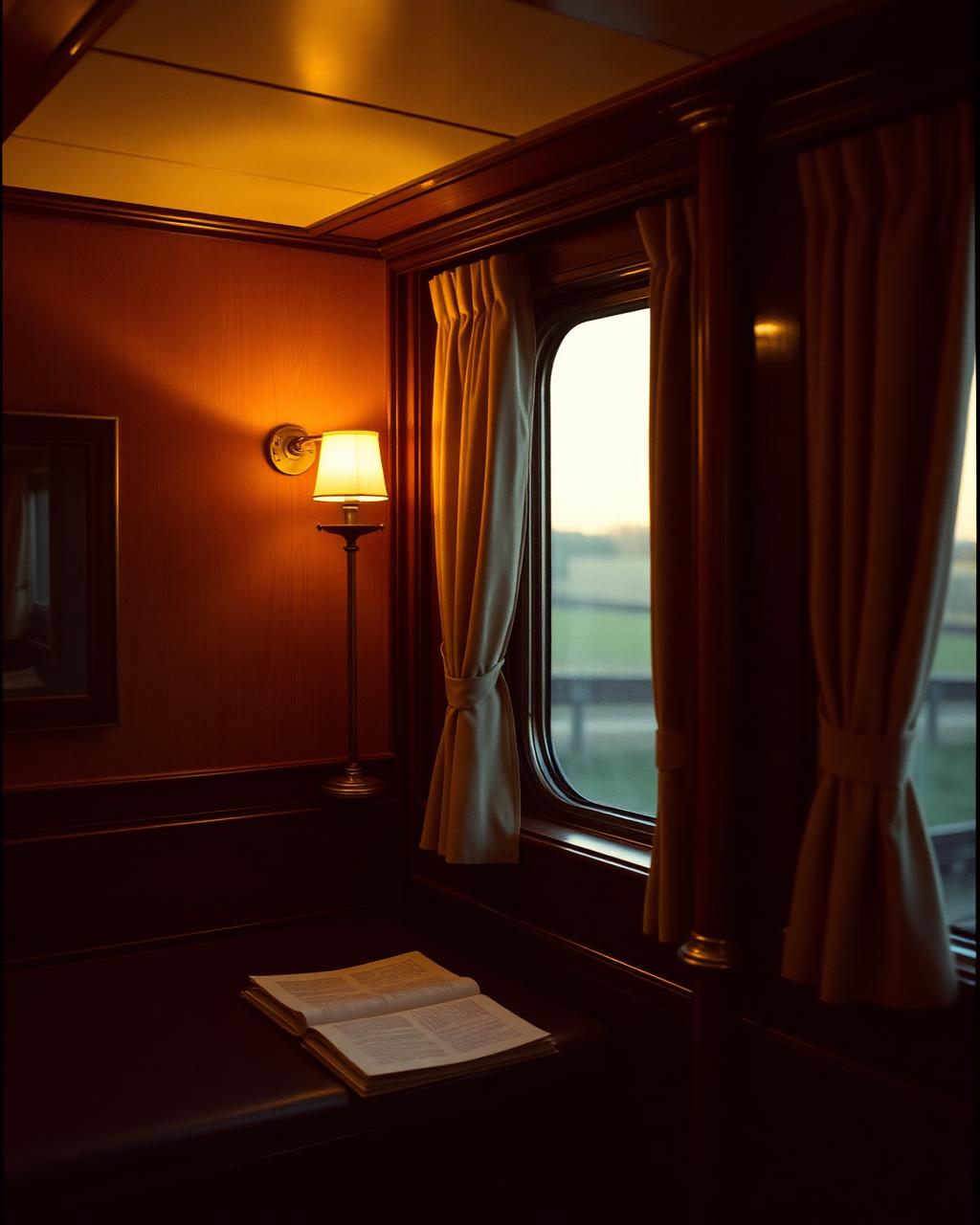
The gentle sway of the carriage, the rhythmic clickety-clack on the tracks, the tapestry of landscapes unspooling outside your window — there is an undeniable romance to train travel. For decades, the airplane seemed to relegate the locomotive to the realm of nostalgia. But something remarkable is happening. Train travel is enjoying a spectacular renaissance, transforming itself from mere transportation into a coveted experience.
As a Fora Travel Advisor and former Delta Air Lines professional, I have spent a significant portion of my career traversing the globe, both in the air and on terra firma. While I deeply appreciate the efficiency of modern aviation, my European adventures by rail awakened me to a different kind of journey — one less about the destination and more about the unfolding narrative along the way.
This resurgence is fueled by a yearning for authentic travel, growing environmental consciousness, and a renewed appreciation for journeys that cultivate presence rather than just speed. Many of the new projects emerging today are designed not just for transport, but for experience, blurring the lines between a luxury hotel and a moving viewpoint.
The European Renaissance
Europe is leading this renaissance with an astounding array of new luxury offerings. Perhaps the most anticipated is the Orient Express La Dolce Vita. Drawing inspiration from Italy's Dolce Vita era of the 1960s, these immaculately restored trains will whisk passengers through 14 of Italy's 20 regions, plus select international connections including Paris, Split, and Istanbul. The attention to detail, the exquisite Italian design, and the culinary excellence promise an unparalleled journey. My professional lens immediately sees this as a competitor to the most exclusive boutique hotels, offering not a static view but a dynamic masterpiece outside your window.
The concept of sleeper trains is undergoing a profound transformation. Midnight Trains, a French startup, aims to launch night trains connecting Paris with Venice, Rome, and Madrid — featuring private rooms with double beds, en-suite bathrooms, and an onboard restaurant. As someone who has navigated countless transatlantic flights, the idea of settling into a comfortable bed in Paris and waking up refreshed in Madrid, having bypassed airport transfers and security lines, is incredibly appealing. When I advise clients who are wary of short-haul flights, these new sleeper concepts are transformative.
Eurostar continues expanding its network. The continued investment in high-speed rail across Europe, like proposed Barcelona-Paris routes, signals a broader commitment to seamless cross-border train travel. For someone accustomed to the hub-and-spoke model of air travel, the city-center-to-city-center efficiency is a revelation.
Asia's Rail Evolution
Japan's Shinkansen network continues to expand with extensions reaching new regions. The Shinkansen is not just a train; it is an engineering marvel. For clients on their first trip to Japan, it is often the first experience I recommend — a seamless, high-speed immersion into Japanese efficiency.
Vietnam has ambitious plans for a high-speed rail line connecting Hanoi and Ho Chi Minh City, with initial sections potentially opening by 2027. This promises to transform domestic travel, offering a robust alternative to internal flights.
India's Vande Bharat network is a remarkable development. With plans to scale to 200 services by 2027, these semi-high-speed trains are modernizing India's vast railway system, offering contemporary comfort for a country where long-distance travel can be challenging.
The Americas
The Rocky Mountaineer continues expanding, with its Rockies to Red Rocks route connecting Denver to Moab through spectacular American Southwest landscapes. What makes it special is the commitment to maximizing views — oversized domed windows, open-air platforms, and gourmet dining. It is an ideal soft adventure that does not require roughing it.
Brightline in Florida is redefining intercity rail, connecting Miami, Fort Lauderdale, West Palm Beach, and Orlando. From a former airline professional's perspective, this is precisely the kind of corridor improvement that makes rail genuinely competitive. Fast, efficient, with comfortable seating and onboard amenities.
Amtrak's corridor improvements are also worth watching. While the US has historically lagged behind in rail investment, renewed federal funding is supporting faster, more reliable service along the Northeast Corridor and beyond.
Africa and the Middle East
Rovos Rail in South Africa remains the gold standard of luxury African rail. Their journeys from Cape Town to Pretoria, and the ambitious Cape Town to Dar es Salaam route, offer a bygone era of elegance through some of the continent's most dramatic landscapes.
The Etihad Rail project in the UAE is connecting Abu Dhabi, Dubai, and beyond, creating a modern rail network in a region traditionally dominated by air travel. Tanzania's new Standard Gauge Railway is connecting Dar es Salaam to inland regions, opening up new possibilities for combining safari experiences with coastal exploration.
How to Evaluate a Rail Journey
Not every train trip justifies its premium over flying. Here is my framework:
Scenic value: If the route passes through landscapes you cannot see any other way — Alpine passes, coastal cliffs, desert canyons — the train wins decisively. A flight over the Swiss Alps shows you clouds; a train through them shows you waterfalls.
Time mathematics: When you factor in airport transfers, security lines, boarding, and baggage claim, many short-haul flights actually take longer than the equivalent train. Paris to London by Eurostar is genuinely faster door-to-door than flying.
The overnight advantage: Sleeper trains replace both a hotel night and a travel day. That is not just convenience; it is economics.
City-center arrival: Trains deposit you in the heart of a city. No taxi from a suburban airport. This alone can save hours and significant money.
The Delta Comparison: When to Fly vs. When to Train
Having worked at Delta, I understand the airline value proposition intimately. Flying wins for distances over 500 miles, for transoceanic crossings, and when time is genuinely scarce. But for corridor routes under 400 miles, overnight connections, and scenic journeys where the transit is the experience, the train is not just competitive — it is superior.
I advise clients to think of it this way: if you would sleep through the flight, consider the sleeper train instead. If the flight is under three hours, price out the train. And if the route passes through landscapes worth seeing, the train is not an alternative to flying — it is an entirely different category of travel.
Booking Strategies
When to book: Luxury trains like Orient Express La Dolce Vita and Rocky Mountaineer sell out months in advance. Book six to twelve months ahead for peak season. European high-speed trains offer the best fares 60-90 days out.
Cabin class comparisons: First class on European trains often costs only 30-50% more than standard but offers dramatically more space, quieter cars, and often included meals. On luxury trains, the difference between cabin categories is primarily about size and view — even the entry-level cabins are exceptional.
Value strategies: Rail passes can offer savings for multi-city itineraries, but do the math. Point-to-point tickets are sometimes cheaper if you are only making two or three journeys. Midweek travel is almost always less expensive.
The Case for Slow Travel
There is something fundamentally different about watching the world change outside a train window. The gradual shift from urban sprawl to rolling farmland, from farmland to mountains, from mountains to coastline — it gives you a sense of geography that flying simply cannot. You understand, viscerally, how places relate to each other, how cultures blend at borders, how landscapes shape the people who inhabit them.
In a world that prizes speed and efficiency above almost everything else, choosing the train is a quiet act of rebellion. It is a declaration that the journey matters as much as the arrival. That presence is more valuable than productivity. That sometimes, the most luxurious thing you can do is simply slow down and watch the world unfold at a pace your eyes can actually follow.
As someone who spent years helping people get places faster, I now find equal purpose in helping them get places more meaningfully. The train, in all its clicking, swaying, landscape-revealing glory, is one of the most powerful tools I have for doing exactly that.