The Tokyo Alleyway That Changed How I Think About Food
A ninety-minute meal in a Shinjuku yokocho — six stools, one chef, no English menu — became a masterclass in kodawari, attention, and why the simplest rice can be the most memorable course.
The Tokyo Alleyway That Changed How I Think About Food
I found it by accident, which is the only honest way to find anything important in Tokyo.
I was walking back to my hotel in Shinjuku after a day that had already rearranged my sensory expectations — the controlled silence of Meiji Shrine, the orchestrated chaos of Shibuya Crossing, the particular Japanese talent for making a convenience store onigiri taste like someone's grandmother made it with love. My feet hurt. My phone was at twelve percent. I was ready to surrender to the hotel lobby and whatever the minibar had to offer.
Then I turned down an alley I hadn't noticed before, and my evening changed. My understanding of food changed. And something deeper shifted — something about what it means to eat with intention in a culture that treats every meal as an act of care.
The Yokocho
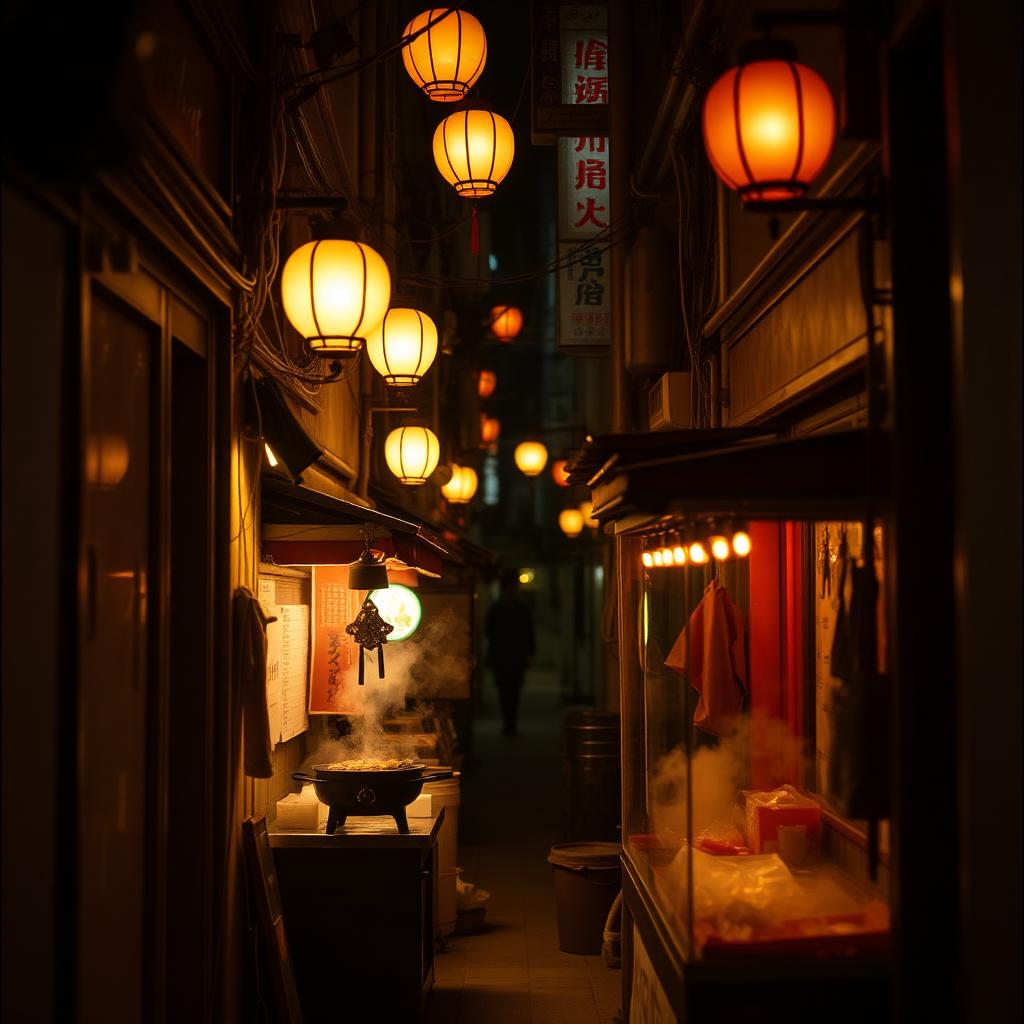
The alley was a yokocho — one of Tokyo's narrow drinking and eating lanes, lined with tiny establishments that seat six, maybe eight people. Each place was barely wider than a doorway. Paper lanterns hung overhead, their warm light turning the wet pavement into something that looked like a watercolor. The air smelled of charcoal and soy sauce and something floral I couldn't identify.
I chose a place with three occupied stools and a counter just deep enough for a plate and a glass. The chef — the only employee — looked up, nodded, and gestured to an empty seat. There was no English menu. There was barely a Japanese menu. A handwritten board on the wall listed what I assumed were the evening's offerings, and I pointed at three items with the confidence of someone who has learned that the best meals come from surrendering control.
What arrived, over the next ninety minutes, was a sequence of small dishes that collectively constituted one of the finest meals I've ever eaten. Yakitori — chicken skewers grilled over binchōtan charcoal with a precision that treated each piece of meat as if it mattered individually. Tsukemono — pickled vegetables with a complexity of flavor that made every pickle I'd eaten previously feel like an afterthought. A small bowl of rice that was, impossibly, the most memorable course. Not because anything was added to it, but because of the quality of the grain, the exactness of the water ratio, the care with which it was cooked and served.
The chef spoke almost no English. I spoke no Japanese beyond sumimasen and oishii. And yet the meal felt like a conversation — each course a sentence, each pause between courses a breath, the entire sequence building toward a conclusion I didn't anticipate: that food, when treated with this level of attention, becomes a form of communication that doesn't require shared language.
What Japan Understands That We Don't
American food culture, even at its most refined, tends to conflate abundance with quality. More courses. Bigger portions. More ingredients per plate. More drama in the presentation. We've built an entire fine-dining vocabulary around complexity and spectacle — the tasting menu as theatrical production, the chef as performer, the diner as audience.
Japan inverts all of it.
The meal in that yokocho cost roughly twenty-two dollars. The chef had been making the same dishes, in the same space, for what the regulars later indicated was over twenty years. There was no innovation happening. No seasonal "reimagining." No Instagram-ready plating. What there was, instead, was mastery — the kind that comes from doing one thing repeatedly, with increasing precision, until the gap between intention and execution becomes invisible.
This is the concept of kodawari — an uncompromising dedication to craft that Japanese culture applies not just to food but to everything from carpentry to calligraphy. It's not perfectionism in the anxious, Western sense. It's more like devotion. A commitment to getting the details right not because anyone will notice, but because the details are the thing.
I've thought about this meal constantly since returning home. Not because it was the most expensive or the most dramatic — it was neither. But because it exposed a set of assumptions I didn't know I was carrying. That a great meal requires rare ingredients. That a restaurant needs ambiance to be special. That food is primarily about taste.
The yokocho taught me that food is primarily about attention. The attention of the person who grew the rice. The person who selected the charcoal. The person who watched the skewer with the patience of someone who believes that the difference between forty-five seconds and fifty seconds over the flame matters. Because it does. I tasted the difference.
Eating as Practice
My Delta years taught me something about food in transit — how airline catering is an exercise in managing compromise, how the altitude changes your palate, how the best first-class meals are the ones that acknowledge the limitations of the environment rather than pretending they don't exist. My Westin years taught me about hotel dining — the logistics of breakfast service, the economics of a restaurant that serves guests who didn't choose it, the difficulty of maintaining consistency across shifts and seasons.
But Tokyo taught me about food as a spiritual practice. That's not hyperbole. In a culture where a sushi apprentice spends years learning to cook rice before they're allowed to touch fish, the preparation of food is treated as a discipline comparable to meditation or martial arts. The goal isn't to feed the body — it's to honor the ingredients, the process, and the person receiving the meal.
This framework has changed how I eat everywhere. Not in the precious, performative way of someone who came back from Japan and started buying Japanese knives. In a deeper way. I notice more. I rush less. I pay attention to the rice — wherever I am, whatever cuisine — because that yokocho chef showed me that the simplest element on the plate often carries the most information about how much care went into the meal.
The Alleyways You Can't Google
I've been asked, many times, for the name and address of that yokocho restaurant. I don't have it. I didn't take a photo of the exterior. I couldn't read the signboard. And honestly, I don't want to send anyone there with expectations, because the magic wasn't in the specific place — it was in the willingness to sit down somewhere unknown and let the experience unfold.
Tokyo is full of these encounters. They hide in Yurakucho's yakitori alleys under the train tracks, in Koenji's unmarked izakayas, in the basement food halls of department stores where the free samples alone constitute a world-class meal. They hide in Osaka's Dotonbori side streets and Kyoto's machiya-converted bistros and every convenience store where a two-dollar egg sandwich is, inexplicably, the best egg sandwich you've ever had.
The trick is not to search for them. The trick is to remain available to them — to keep one evening unscheduled, to leave the hotel without a reservation, to trust that a country this devoted to craft will find a way to show you something extraordinary if you simply walk slowly enough to notice the entrance.
I walked slowly that night in Shinjuku. And a doorway I almost missed became a meal I'll never forget. That's not tourism. That's not even travel, exactly. It's the thing that happens when you stop performing exploration and start actually practicing it.
The alleyway changed how I think about food. But what it really changed was how I think about attention — where I place it, how I hold it, and what becomes possible when I stop reaching for the obvious and start noticing what's already there.