The Places Between
We did not go to Germany. Not in the way I understood travel then. It was not the destination. It existed instead as something in between—something we passed through in order to reach somewhere else.
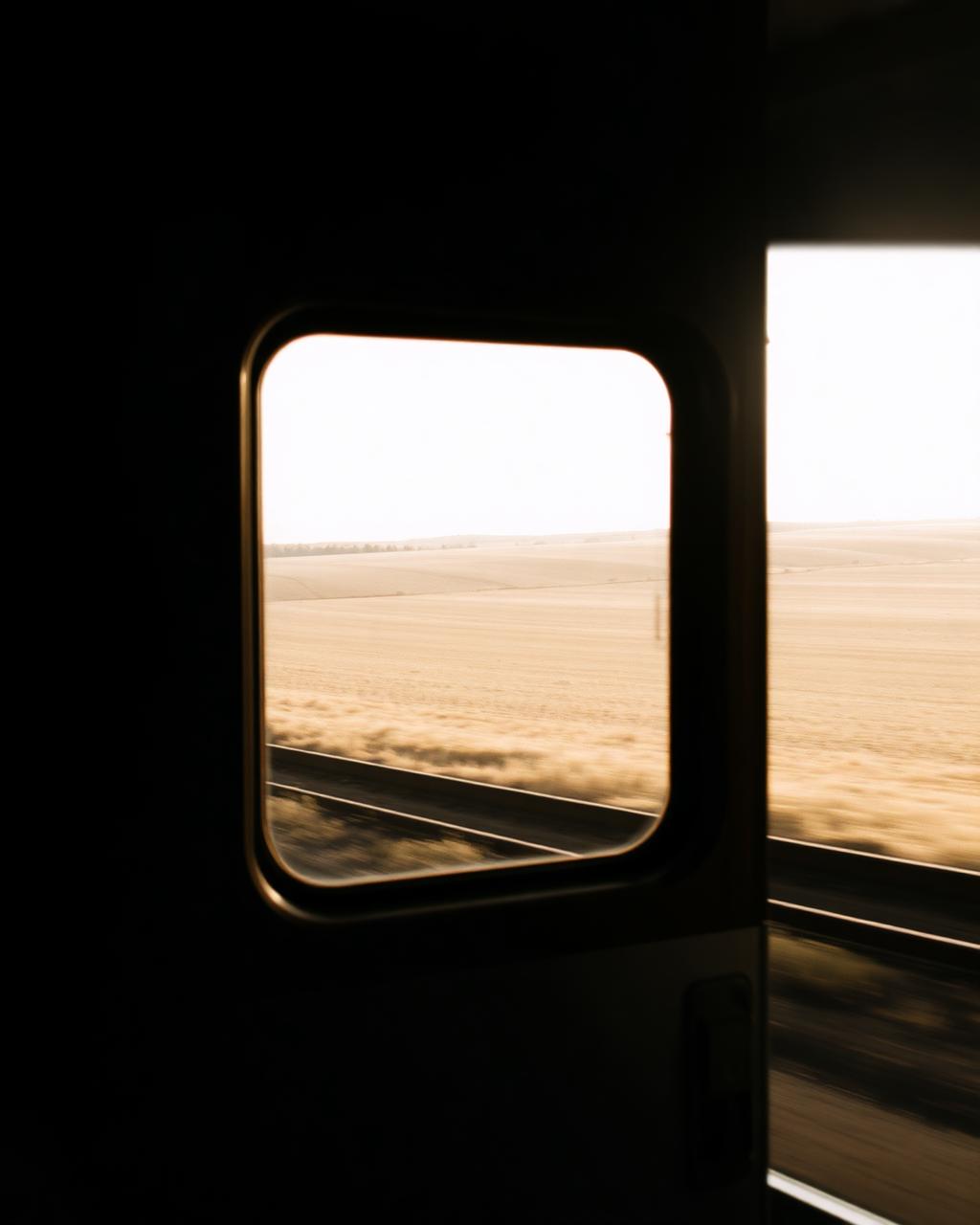
We did not go to Germany.
Not in the way I understood travel then.
It was not the destination. It was not the place we had planned to see, the place we had talked about before arriving, the place that held something specific we were meant to experience. It existed instead as something in between—something we passed through in order to reach somewhere else.
"To get to Denmark, you must pass through Germany."
That is how it was explained to me.
Not as a place of its own, but as part of the process of getting somewhere that mattered more.
We had been in the car for hours by the time we stopped.
I don't remember the exact moment we entered Germany. There was no shift I could recognize, nothing that clearly separated where we had been from where we now were. The road continued. The landscape changed in ways too subtle for me to name. Whatever difference existed did not announce itself.
We were simply there.
And because I had no marker for arrival, I treated it like everything else that happened between one place and the next.
We ended up staying the night.
A hotel, chosen out of necessity more than intention, the kind of place that existed to hold travelers temporarily—people who were not staying, only stopping. I did not think of it that way then. I only knew that we were no longer moving.
That, for the moment, was enough.
We went for a walk.
It was a golden evening, the light softening as if the day were being folded away.
A cool breeze moved through the streets.
Not dramatically so, not in a way that made me stop and notice immediately, but in a way that settled into the body slowly. The kind of difference you register without understanding why it feels unfamiliar.
The streets were clean.
That is what I remember most clearly—not just the absence of anything out of place, but the sense that everything had been maintained, held in position. Sidewalks without cracks. Buildings without visible wear. Windows reflecting the fading light in a way that made everything feel still, even as we moved through it.
There were fewer people than I expected.
Or maybe they were just quieter.
No one called out. No one lingered. Movement felt contained, purposeful, as if everyone knew exactly where they were going and did not need to announce it.
I watched them as we passed.
Not trying to understand.
Just noticing.
The language moved around me in sounds I could not follow—sharper than what I was used to, more structured somehow. It rose and fell quickly, then disappeared just as fast, leaving no space for me to hold onto it.
We turned down one street, then another.
Each one felt similar, not in a way that made them indistinguishable, but in a way that made them consistent. There was a rhythm to it, something steady beneath the movement that I could feel without naming.
I did not think, this is Germany.
I did not think anything at all.
I simply walked.
And when you are a child, walking is sometimes the only way you know to be present.
We found somewhere to eat.
I ordered a Margherita pizza and a Fanta.
I remember that clearly.
Not because it was remarkable, but because it wasn't.
It was familiar.
Something I recognized in a place I did not.
The restaurant was indoors, ordinary in the way restaurants are ordinary when you don't yet know what you're supposed to notice.
The table, just a table.
The meal, something I had eaten before, in other places, in other countries that I also did not fully understand.
There was comfort in that.
Not something I questioned.
Just something I accepted.
The Fanta tasted different than it did at home—orange, but cleaner. Fresher. Less chemical. Almost like it didn't want you to keep reaching for it.
We ate.
We spoke.
We left.
Nothing about it stood apart enough to fix itself in memory.
And yet, I remember it.
Because sometimes what you remember is not what was special, but what allowed you to feel steady.
Back at the hotel, everything slowed.
The room felt temporary.
Not uncomfortable, not unfamiliar, but clearly not meant to be held onto. The furniture was arranged neatly, precisely, as if it had been set that way for every person who passed through. Nothing personal. Nothing left behind.
It had a boutique feeling—clean, intentional, different from the luxury hotels and resorts I would come to know later. Not worse. Just different, like a place designed for stopping rather than arriving.
I moved through the space slowly.
Setting things down.
Picking them up again.
Not because I needed anything, but because it was the first time all day that everything had stopped moving.
The quiet felt different here.
Not like the quiet of the cathedral I would later remember in another country—full, weighted, intentional.
Not like the quiet of the streets—controlled, structured.
This quiet felt neutral.
Unclaimed.
A pause.
I sat on the edge of the bed for a moment longer than I needed to.
My body felt heavy.
Not from anything that had happened in Germany, but from everything that had come before it—the long drive, the constant shifting, the movement from place to place without enough time to settle into any of them.
This was the first time I noticed it.
Not as exhaustion I could name, but as something I could feel.
The sensation of stopping.
Of stillness after movement.
I looked around the room, trying, without realizing it, to attach something to it—to make it feel like a place I could remember.
But nothing stood out.
No defining detail.
No single moment.
Just the awareness that we were there.
And that we would not be there for long.
So I let it remain what it was.
A place to rest.
Nothing more.
And maybe that was the lesson, even then: not everything asks to be held.
The next morning, we left.
Cold pizza for breakfast.
Back into the car.
Back into motion.
Toward the ferry that would take us from Germany to Denmark.
There was no ceremony to it.
No sense of departure.
No moment that marked the end of one place and the beginning of another.
We simply moved on.
And the road, as always, made the decision for us.
For a long time, I did not think of Germany as a place I had been.
When I listed the countries I had visited, it was an afterthought—something included only because it technically counted. I had slept there. I had eaten there. I had walked its streets, however briefly.
But I had not experienced it.
Not in the way I understood experience then.
There were no landmarks tied to it in my memory. No singular moment that defined it. No story that felt complete within its borders.
It did not stand on its own.
It existed as a passage.
A necessary step between two points.
And because of that, I did not give it weight.
I did not try to hold onto it.
I did not return to it in my mind the way I did with other places.
It simply happened.
And then it was gone.
But places do not disappear just because we do not name them.
It is only now, looking back, that I understand what that moment held.
Not because of what I did there.
But because of what I did not.
I did not try to define it.
I did not force it into meaning before I was ready to understand it.
I moved through it the way I moved through everything then—present, but unanchored. Aware, but not yet interpreting.
And there is something in that now that feels important.
Because not every place announces itself.
Not every place demands to be understood in the moment you enter it.
Some places exist quietly, offering nothing more than presence—waiting, perhaps, for you to return to them later, not physically, but in memory, with a different kind of awareness.
Germany, for me, was one of those places.
I did not understand it then.
I did not need to.
It still became part of me.
And once you realize that, you begin to see how many parts of your life were formed in transit.
It took time to understand that not every place needs to leave behind a clear memory in order to matter.
That significance is not always tied to what you can recall in detail.
Some places exist only in fragments.
A street.
A meal.
A night's rest.
A feeling you did not yet know how to name.
They are easier to overlook.
Easier to dismiss as insignificant.
But they are not.
Because they are part of the movement.
Part of the way we learn, slowly and without realizing it, that the world is larger than what we can fully understand at once.
Germany was not a place I arrived in.
It was a place I moved through.
And in doing so, it became part of how I began to understand what it meant to move at all.
I did not go to Germany.
But I was there.
And sometimes, that is enough.