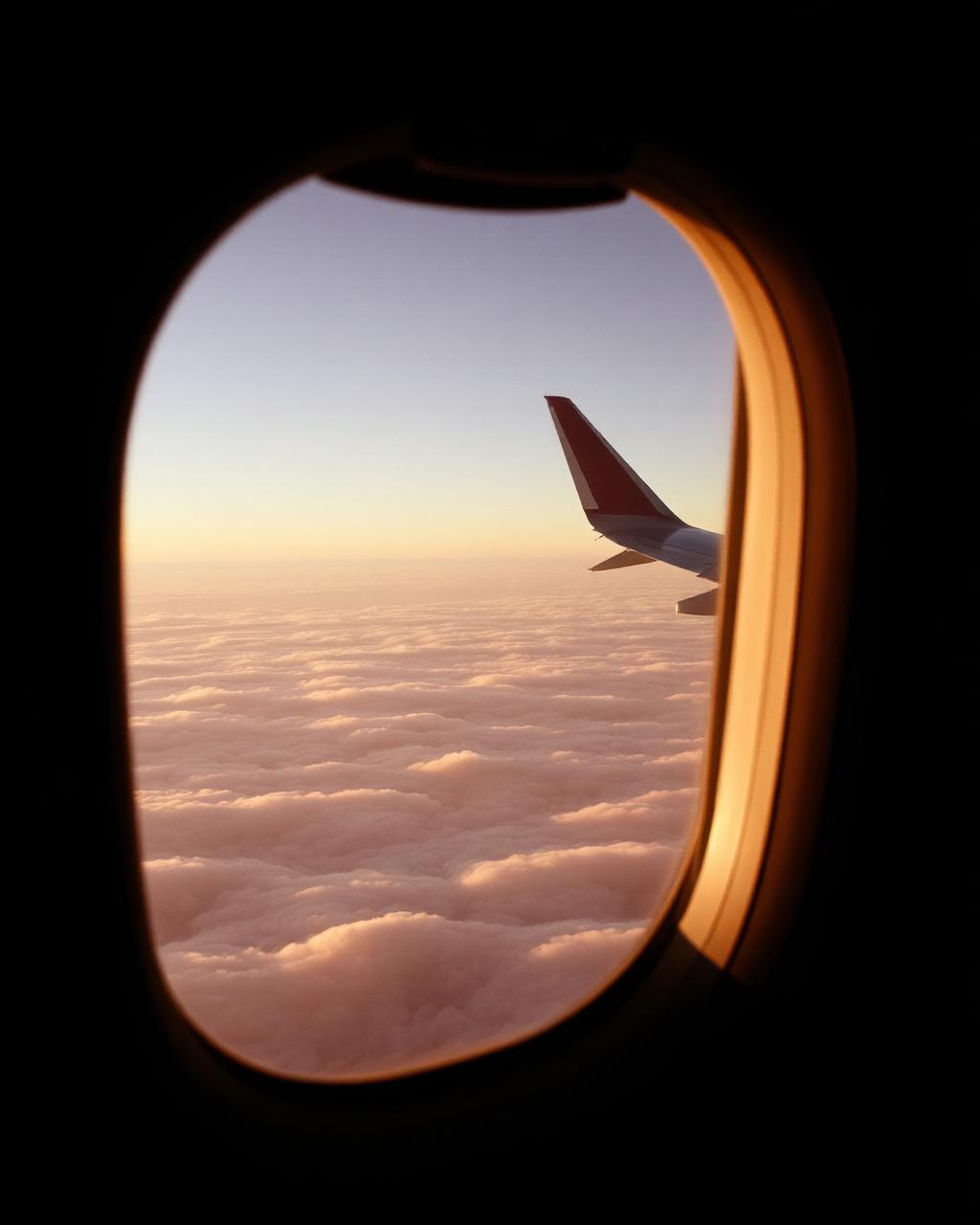
The Airline Nobody Sees: What Working at Delta Taught Me About Travel
Most travelers see an airline as a transaction. I saw it from the inside — the choreographed chaos, the unsung heroes, the moments that shaped how I understand every flight I book today as a Fora advisor.
The Airline Nobody Sees: What Working at Delta Taught Me About Travel
Most travelers see an airline as a transaction. You buy a ticket. You board a plane. You arrive somewhere else. The in-between — the seat, the snack, the delay — is either tolerable or infuriating, and the whole thing is measured in whether you got there on time.
I used to see it that way too. Then I worked at Delta Air Lines, and the entire machine became visible.
Behind the Curtain
Delta is an operation of extraordinary complexity. On any given day, the airline operates over 4,000 flights, moving roughly 200 million passengers a year across six continents. The logistics of this — the scheduling, the maintenance, the crew management, the fuel calculations, the weather monitoring, the gate assignments — constitute one of the most intricate choreographies in modern commerce.
Working inside that system taught me something that most travelers never learn: the miracle is not that flights get delayed. The miracle is that they happen at all.
Every flight that pushes back from the gate on time represents the successful coordination of dozens of teams — ramp workers loading bags, fuelers calculating weight, caterers stocking meals, mechanics completing walk-arounds, gate agents managing boarding, dispatchers monitoring weather, and pilots reviewing flight plans. If any single link in that chain breaks, the flight is affected.
Understanding this changed my relationship with air travel permanently. I stopped being a passenger who was annoyed by delays and became a traveler who was amazed by departures.
How Flights Are Priced
This is the question everyone asks when they learn I worked at an airline: How do I get cheap flights?
The answer is both simple and unsatisfying: airline pricing is dynamic, algorithmic, and designed to maximize revenue per flight. The price you see at any given moment is the result of demand forecasting, competitive analysis, route profitability calculations, and historical booking patterns.
But here is what I learned that most people do not know:
Tuesday afternoon is not magic. The old advice to book on Tuesday at 1 PM was based on a fare-filing cycle that airlines have since abandoned. Prices now change continuously based on demand.
Flexibility is the real currency. The cheapest fares go to travelers who can be flexible on dates, times, and even airports. A one-day shift in departure can save hundreds of dollars. Flying out of a secondary airport — Providence instead of Boston, Oakland instead of San Francisco — can save even more.
Book early for peak, late for off-peak. If you are traveling during holidays, spring break, or summer, book as early as possible — those flights fill up and prices only go up. For off-peak travel, prices sometimes drop as the departure date approaches because airlines would rather sell a seat at a discount than fly it empty.
The fare class matters more than the price. A cheap fare in a restricted class (Basic Economy) comes with trade-offs — no seat selection, no changes, last to board, first to get bumped. A slightly more expensive fare in a flexible class can save you hundreds in change fees and frustration.
What Employees Know
Working at an airline gives you access to information that the general public simply does not have. Some of it is proprietary. Some of it is just observational — patterns you notice when you watch the operation from the inside.
The best seats are released at check-in. Premium seats that were held for elite members or operational needs are often released 24 hours before departure. Check in exactly at the 24-hour mark and you may find better seat options than when you booked.
Connecting flights are riskier than you think. The minimum connection time listed by the airline is the minimum — not the comfortable margin. I always recommend at least 90 minutes for domestic connections and 2-3 hours for international. The cost of a missed connection — rebooking, hotel, lost vacation time — far exceeds the cost of a slightly longer layover.
Gate agents have more power than you realize. They can rebook you, upgrade you, change your seat, waive fees, and solve problems that the phone agent cannot. But they are also managing a hundred other passengers, a tight turnaround, and a boarding clock. Approach them with patience, clarity, and kindness, and they will move mountains for you.
The pilot is the final authority. If a pilot says the flight is delayed for weather, maintenance, or crew rest, there is no appeal. This is a safety decision, and it is non-negotiable. I have seen passengers scream at gate agents over delays that the pilot initiated. That energy is wasted. The pilot will not hear it, and the gate agent cannot change it.
How Delta Shaped My Travel Philosophy
Working at Delta taught me that travel is a system, not a series of isolated moments. The flight is connected to the hotel is connected to the ground transport is connected to the itinerary is connected to the traveler's energy and expectations.
When I plan trips for clients, I do not just book flights — I design the entire transit experience. I consider:
Energy management. A red-eye followed by a full day of sightseeing is a recipe for exhaustion. I build in buffer time — a hotel night before the tour begins, a morning to acclimate, a flexible first day.
Connection psychology. Some travelers find connections stressful. Some find them exciting (new airports, new lounges). I match the routing to the traveler, not the other way around.
Airline personality. Every airline has a culture. Delta's culture is operational excellence and Southern hospitality. Singapore Airlines is precision and luxury. Southwest is efficiency and humor. Matching the airline to the traveler is as important as matching the hotel.
The return flight matters as much as the departure. Most people put all their planning energy into the outbound journey and treat the return as an afterthought. I plan the return with equal care — comfortable seating, reasonable timing, enough buffer for packing and checkout.
Travel Insurance: The Airline Employee's Perspective
I am a zealot about travel insurance, and Delta is partly why.
I watched enough operational disruptions — weather, mechanical, crew scheduling — to know that cancellations and delays are not rare events. They are normal parts of the system. The question is not whether your trip will be disrupted. The question is whether you are protected when it is.
Good travel insurance covers trip cancellation, interruption, medical emergencies abroad, and — critically — medical evacuation. A medical evacuation from a remote destination can cost over $100,000. Insurance that covers this typically costs 5-8% of your trip cost.
Every client I work with has travel insurance. It is not optional in my practice. This is not fear-based advising — it is informed advising, based on years of watching the system from the inside.
The Emotional Side of Flight
What surprised me most about working at an airline was the emotion.
I watched families reunite at the gate. I watched soldiers come home. I watched first-time travelers — wide-eyed, nervous, clutching their boarding passes — step onto a plane that would take them somewhere they had only dreamed about.
I also watched grief. Passengers flying to funerals. Parents flying to sick children. People whose faces told you that this flight was not a vacation — it was a necessity, and they were barely holding it together.
These moments reminded me that air travel is not a commodity. It is a conduit. It carries people through the most important moments of their lives — the celebrations, the emergencies, the beginnings, the endings. And the people who operate the system — the gate agents, the flight attendants, the mechanics, the ramp workers — are facilitating those moments, even when they do not know it.
This is the airline nobody sees. Not the brand. Not the stock price. Not the loyalty program. The people. The purpose. The quiet, enormous importance of getting someone from where they are to where they need to be.
Practical Air Travel Wisdom
Download the airline app. It is your most powerful tool for real-time updates, mobile boarding passes, seat changes, and rebooking during disruptions. The app often has rebooking options faster than the phone queue.
Know your rights. In the EU, passengers are entitled to compensation for delays over three hours on flights departing from EU airports. In the US, rights are more limited, but airlines are required to rebook you on the next available flight at no charge if a cancellation is within their control.
Pack essentials in your carry-on. Medications, a change of clothes, chargers, and important documents should never be in checked luggage. If your bag is delayed, you can still function.
Be early. Arriving at the airport two hours before domestic and three hours before international flights is not excessive — it is strategic. It gives you time to handle problems, clear security calmly, and board without stress.
Treat every airline employee like a human being. They are working long hours, managing difficult situations, and dealing with passengers who treat them like obstacles. A simple "thank you" goes further than you think.
What I Carry From Delta
I left Delta, but Delta never left me.
Every time I book a flight, I see the operation behind it. Every time I advise a client on connections, seat selection, or insurance, I am drawing on the knowledge I gained inside the system. Every time I watch a plane push back from the gate — that gentle, almost imperceptible moment when the aircraft begins to move — I feel a small swell of admiration for the hundreds of people who made that moment possible.
Travel is not just about where you are going. It is about how you get there. And understanding the how — deeply, honestly, from the inside — is what makes the difference between a trip that happens to you and a trip you design with intention.
Delta taught me the how. And I bring it to every client, every itinerary, every journey I help create.